




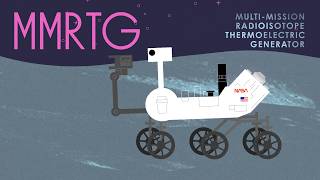
A Multi-Mission Radioisotope Thermoelectric Generator (MMRTG) generates small amounts of electricity. It is the perfect, ultra-reliable power system for remote observation equipment or robotic explorers and is currently used to power the Mars Curiosity and Perseverance rovers. What could it power on the Moon?
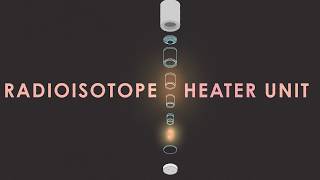
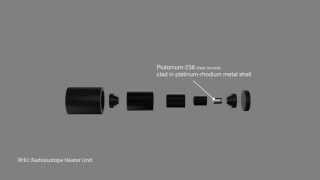
A Radioisotope Heater Unit (RHU) generates heat. It won’t provide electricity, but it will help space technologies that need to stay warm or survive cold lunar nights. What could it keep warm on the Moon?
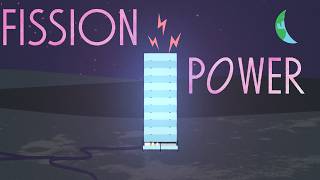
Fission power systems will generate great amounts of energy by converting the heat to electricity. Large fission systems on Earth can power entire cities, but what could these smaller reactors power on the Moon? This technology would make an ideal, robust energy source for living, working, and building things on the Moon.
YOUR WRITTEN SUBMISSION: We want to hear what powers you! Using 200 words or less, describe at least one personal superpower that could help NASA explore the Moon with nuclear power. Whether you are an astronaut on the Moon one day, or whether you use your powers here on Earth, it takes a team of many different skills and personality traits to explore! Describe how your unique superpower will help explore the Moon.
Explore the EDUCATION RESOURCES to brainstorm ideas and learn more about nuclear power and the Moon. Your entry must be original and entirely your own—no generative AI is allowed – and don’t include your name or anyone else’s name in your entry. Read the RULES for all requirements. Entries will be judged in three grade groups: K-4, 5-8, and 9-12. Every student who enters will get a digital certificate and an invite to a virtual event with NASA nuclear power experts, where students will learn what powers the NASA workforce to dream big and explore. Fifteen semifinalists per grade group (45 total) will win a NASA Prize Pack. Three national finalists per group (9 total) get a virtual session with a NASA expert. One grand prize winner per group (3 total) wins a trip for two to NASA’s Glenn Research Center in Cleveland.
Good luck!
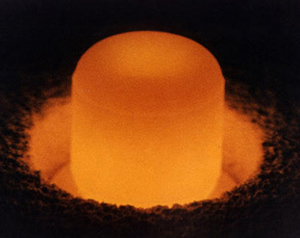 NASA’s RPS Program
What Is Radioisotope Power and Why Does NASA Use It?
RPS Multi-Mission Radioisotope Thermoelectric Generator (MMRTG)
RPS Radioisotope Heater Units (RHUs)
5 Things You Need to Know about Fission Surface Power Systems
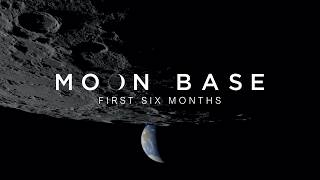
NASA’s Moon Base Systems
NASA’s Moon Base
The Lunar South Pole Region
The Earth’s Moon


Lunar Habitat
Astronauts will need a habitat on their Moon base that provides basic life support systems – including air to breathe, food to eat, water to drink, and a toilet to use. But there is also important work to do! What structures do astronauts need to live, work, and conduct important research on the Moon’s surface? Just like a home or office here on Earth, these habitats will need a lot of continuous power! Think big power. Think fission power!
Robotic Rovers/Scientific Explorers
Uncrewed lunar terrain vehicles, rovers, and propulsive drones can travel to distant locations and dark craters. There is so much to learn and discover on the Moon - from mapping lunar terrain to searching for lunar ice. Where will these rovers and explorers go? What will they explore? What kinds of scientific investigations will they conduct? With MMRTG power, you can dream up robotic explorers that can go out and explore for days, months, or even years on end.
Space Walks and Crewed Vehicles
Astronauts will need to conduct spacewalks and drive vehicles around their Moon base. And they’ll need reliable energy to do it! How will they recharge their vehicles or their spacesuits? Fission reactors can support charging stations for larger power needs, while MMRTGs can provide portable power that can go long and far.
Stationary Science
Sometimes science needs to travel, and sometimes science can stay put. What standalone scientific instruments can be deployed to further understand the Moon? From monitoring moonquakes to placing sensors or cameras at specific locations to collect data - big knowledge can be collected in small packages, so long as it stays powered, toasty and warm!
In-situ Resource Utilization
Lunar regolith (lunar soil) might look dull and gray, but it’s full of uses! It can be mixed with cement to make buildings. And don’t forget the water ice! Ice can be harvested to make drinkable water or even separated out into hydrogen and oxygen to make rocket fuel. What heavy-duty machinery will you have on your Moon base that digs, mines, or harvests resources to build what astronauts need to live and work on the Moon? Big equipment takes big fission power, but there is plenty of small equipment that needs portable RPS power and heat, too.
Antennas and Receivers
Sending and receiving information is a must-have in space! Astronauts need to talk with each other on the Moon’s surface, talk with mission control back on Earth, and talk with their family back home. But don’t forget that robots need to communicate, too! How does all of that information get sent back and forth – from Moon to Earth? What communications equipment will be on your Moon base? What nuclear power will your communications equipment need?
Have a nuclear-powered Moon base idea that doesn’t fit into the categories above? No problem! Feel free to dream up anything you want; the possibilities are endless. How will radioisotope power systems and fission power systems help enable human exploration at your Moon base?
It takes many different people and skills to explore the Moon. Think about your Moon base, and what skills will be needed to support it. Not all missions work exactly as planned. What skills can you bring to the table when faced with new challenges? Whether it is the ability to solve a problem, code a program for a microcontroller, communicate effectively, or some other skill, think about how you would contribute to exploring the Moon.
Just like nuclear power has qualities that make it well-suited for space exploration, YOU also have unique personality traits that make you well-suited for exploration. Are you determined, brave, positive, or ambitious? Are you adaptable, resilient, or stable under pressure? Think about the personality traits you have that would make your lunar dreams come true.
If your power doesn’t fit into the categories above, no problem! Choose any personal strength unique to you that will help you achieve success.
NASA missions exploring some of the most distant, darkest, and dustiest regions of the solar system and beyond are enabled by nuclear power systems. NASA’s Radioisotope Power Systems Program partners with the U.S. Department of Energy to provide the power to explore. Under the authority of the Space Reactors Directorate of the Research and Technology Mission Directorate, NASA provides nuclear power—both radioisotope and fission—to enable missions to the most challenging environments in space, where sunlight may be too limited or unreliable for conventional solar power.
Thank you for your interest in contacting Future Engineers. We look forward to connecting with you!
General Inquiries
support@futureengineers.orgSponsorship Inquiries
sponsor@futureengineers.org