

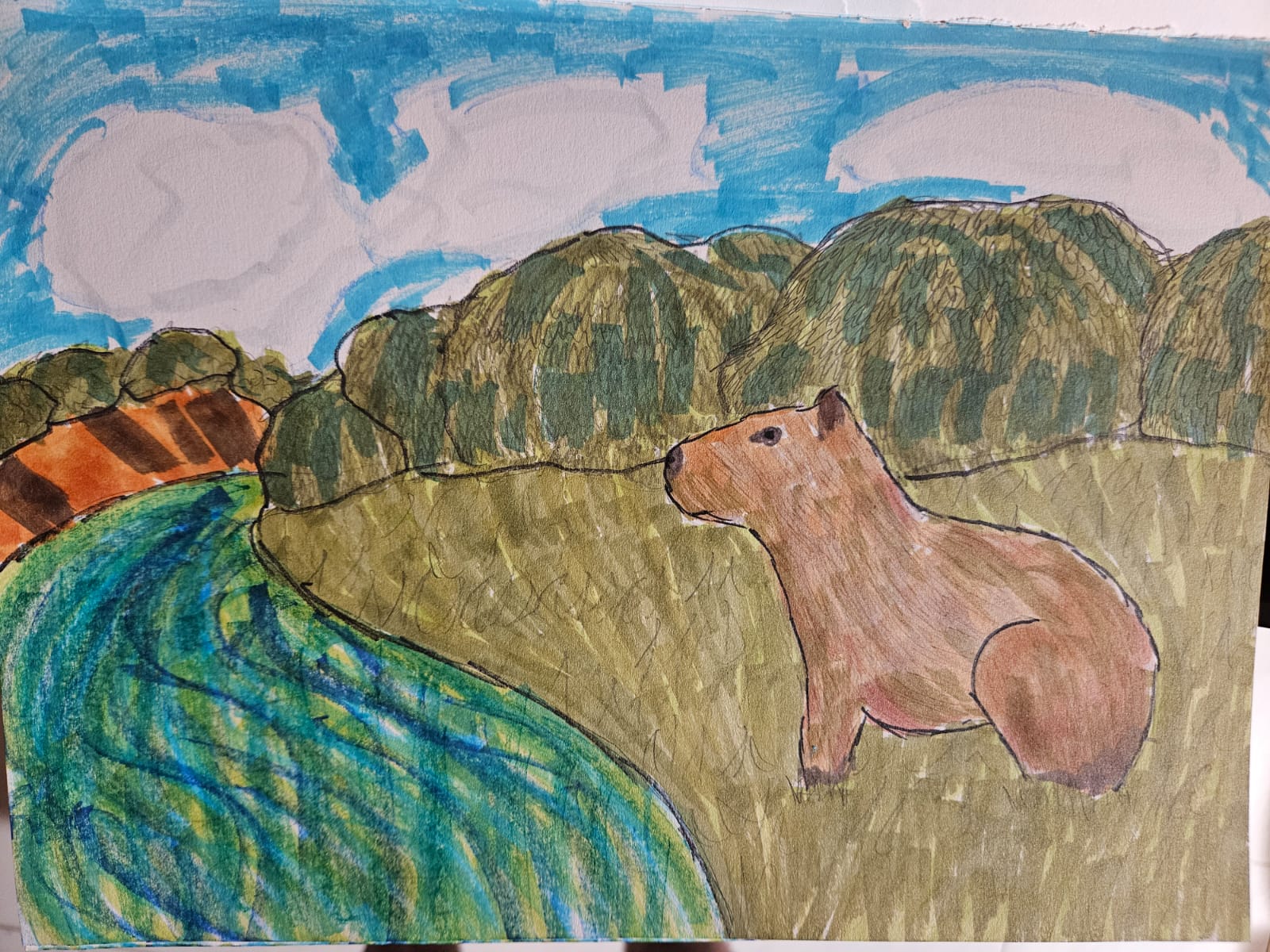
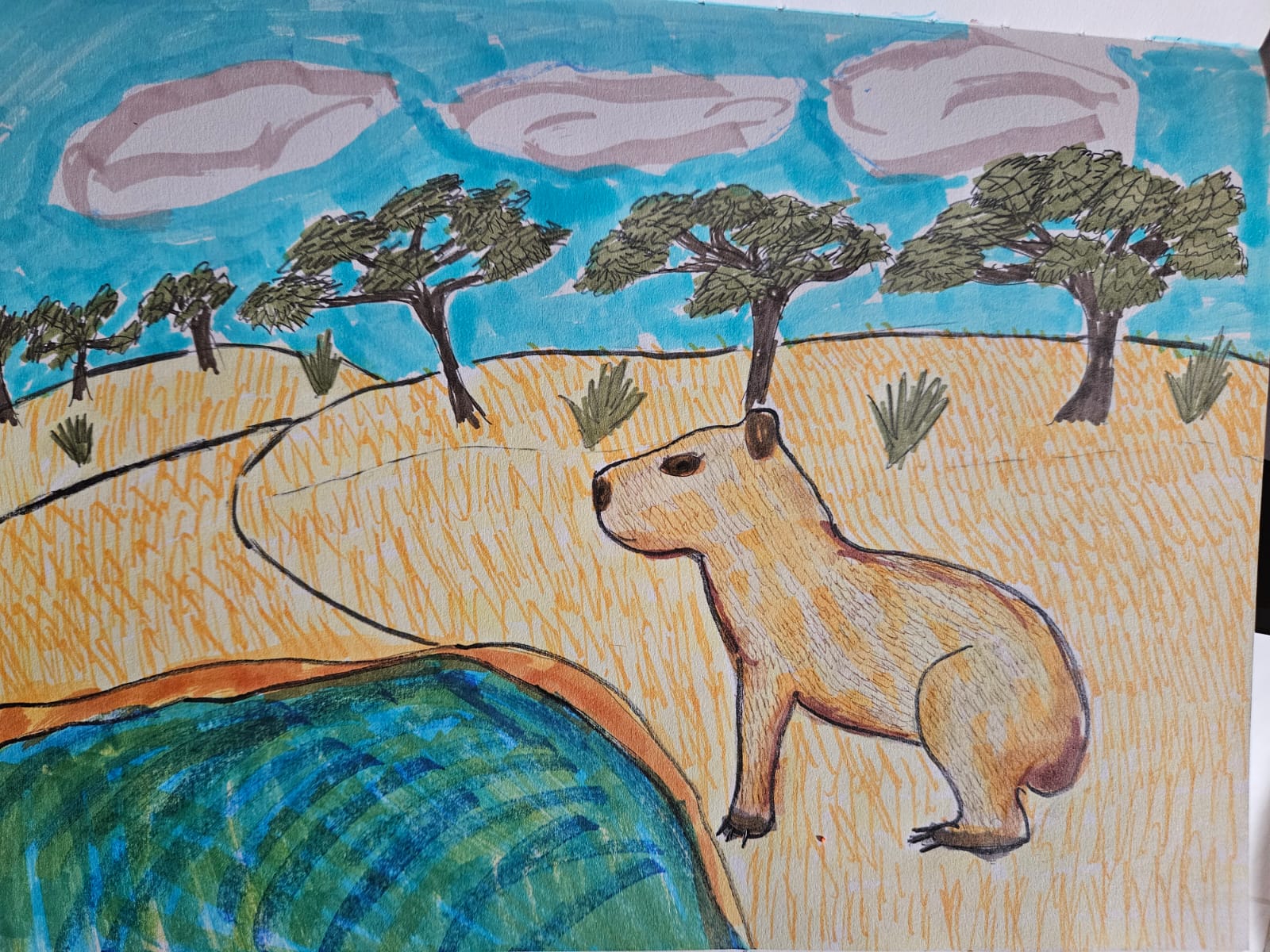
The capybara inhabits South America by rivers, lakes, ponds, etc. They are semi-aquatic, because they submerge themselves in water to escape predators. This causes the high placement of their ears, eyes, and nose on their faces. They are herbivores and usually picky with their food, only increasing the different plants they eat during dry season.
Climate change has put rainforests in South America in danger of drying up; they could possibly turn into dry grasslands. In order to survive, the capybara will not need to swim as water will be scarce. Therefore, their facial features will move lower for better access to food. They will become smaller to require less sustenance to function, and have lighter fur to adapt to the heat. The lack of water to hide from predators will result in changing the hide’s color to camouflage. They will also broaden their palate in order to find food.
Contact us
Thank you for your interest in contacting Future Engineers. We look forward to connecting with you!
General Inquiries
support@futureengineers.orgSponsorship Inquiries
sponsor@futureengineers.org