

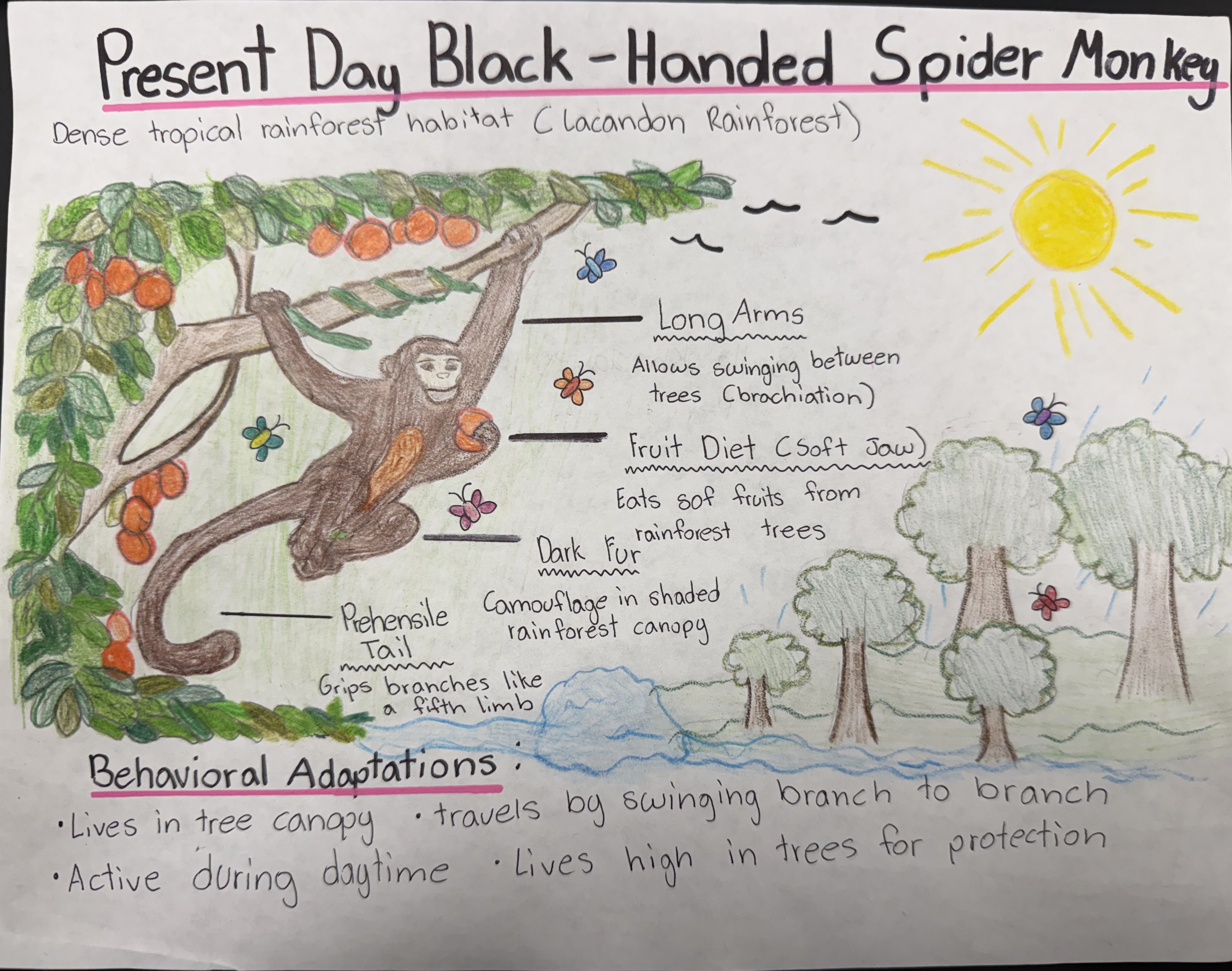
The Black-handed spider monkey currently lives in dense tropical rainforests where tall trees allow it to swing between branches using its long arms and prehensile tail. However, climate change and deforestation are expected to reduce rainforest canopy cover in the future. As trees become fewer and temperatures rise, spider monkeys may need to adapt to spending more time on the ground.
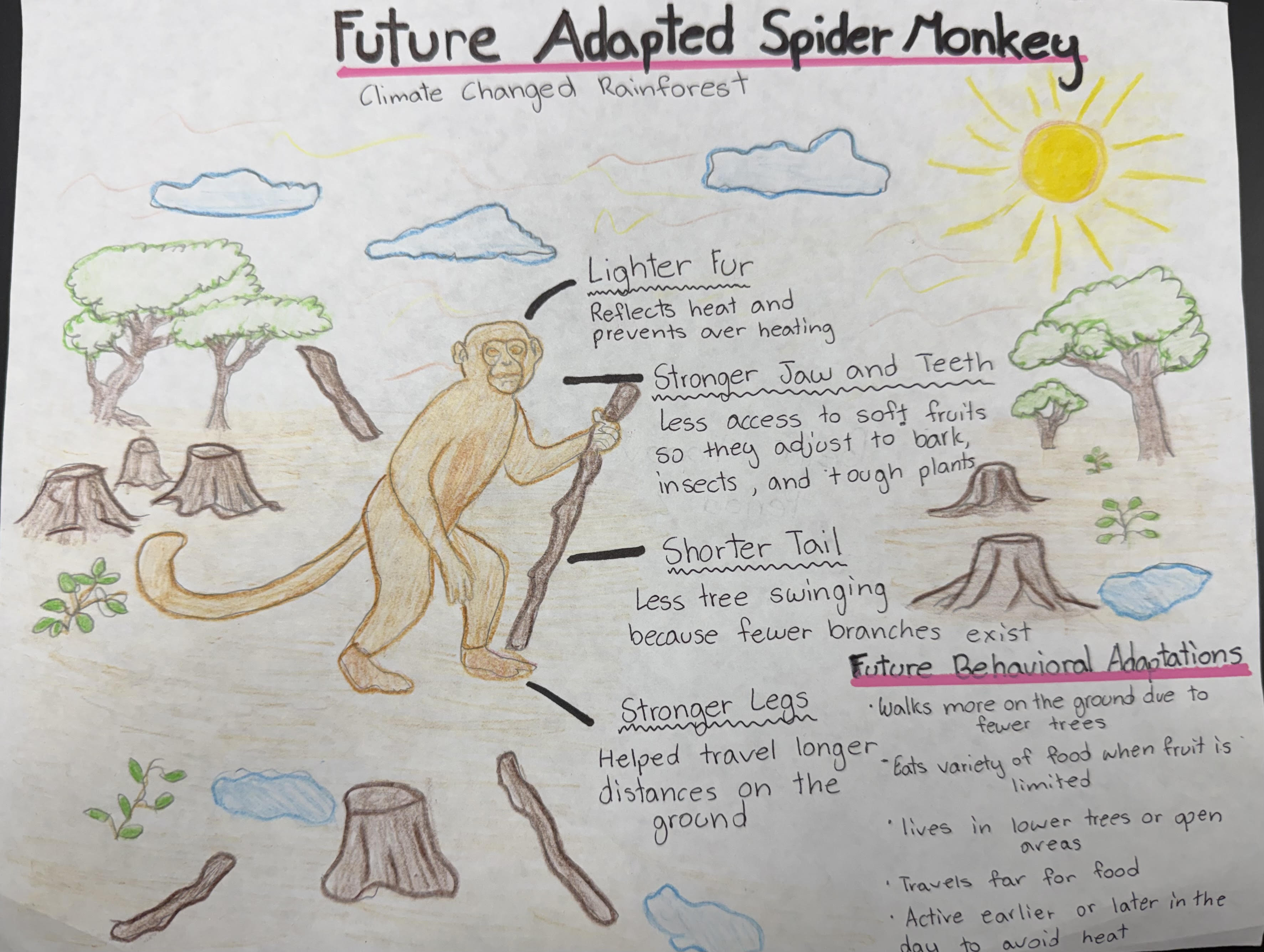
In my future illustration, the spider monkey has lighter fur to reflect heat and prevent overheating in warmer environments. Its legs are stronger to allow longer travel across the ground when trees become farther apart. Because fruit may become less available, the monkey develops a stronger jaw and teeth to be able to eat tougher foods such as bark, insects, and hard plants. The tail becomes shorter because swinging between branches becomes less common. These adaptations help the spider monkey survive in a hotter, more open rainforest environment.
Contact us
Thank you for your interest in contacting Future Engineers. We look forward to connecting with you!
General Inquiries
support@futureengineers.orgSponsorship Inquiries
sponsor@futureengineers.org