

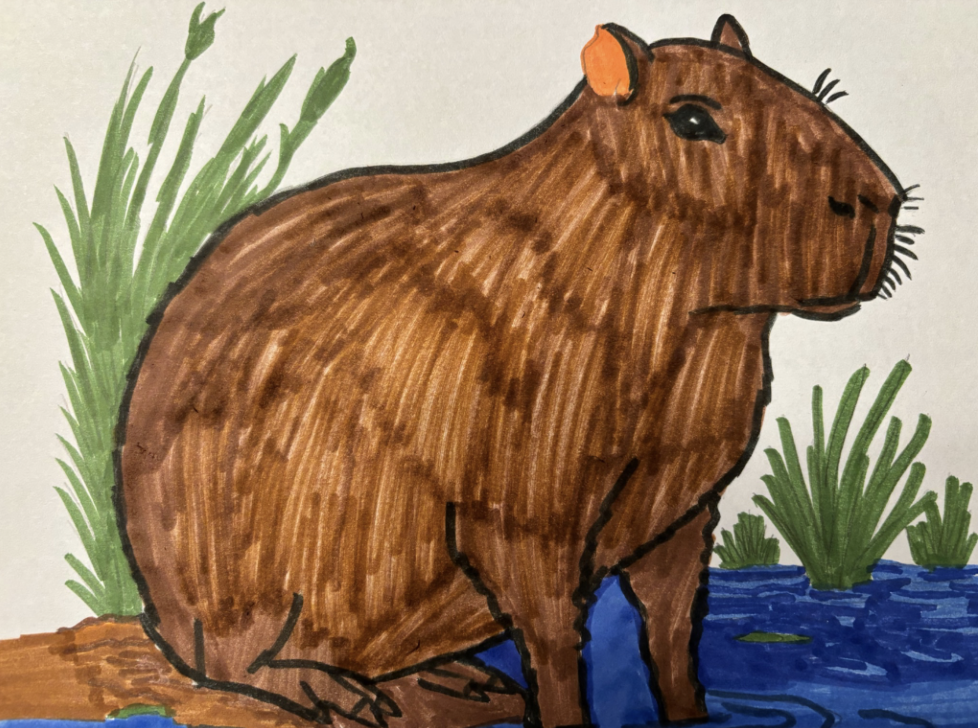
The name capybara comes from the phrase ka'apiûara, originating in the indigenous Tupi language which has morphed into modern day Guarani. Similar to the years of linguistic change that influenced the name capybara, environmental change will also drastically affect them.
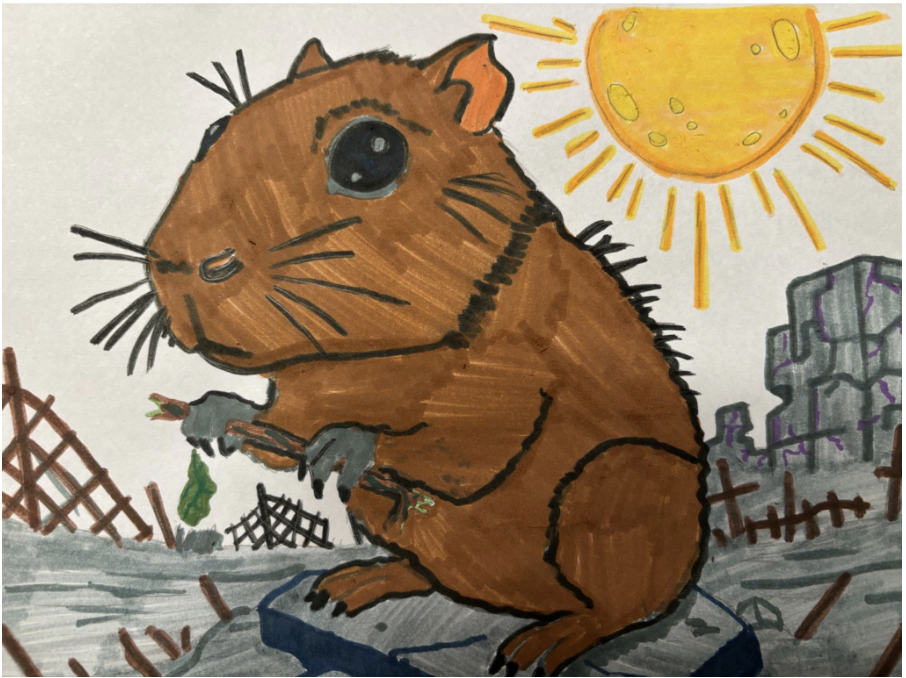
Bolsillo-bara, “pocket-bara” in Guarani, is the advanced variation of a capybara that has adapted through years of environmental change. Its habitat has been fragmented into isolated islands of nature surrounded by vast wastelands, where resources are scarce and wildlife must fight to survive. To thrive in this habitat, the capybara has become the bolsillo-bara, which is significantly smaller than its ancestors, nocturnal, has defensive quills, and sharper teeth. Its new size allows it to need less food, while being nocturnal lets the bolsillo-bara avoid heat and threats. Sharper teeth enable it to eat anything it finds, and defensive quills let the bolsillo-bara stay protected in the absence of its herd.
Contact us
Thank you for your interest in contacting Future Engineers. We look forward to connecting with you!
General Inquiries
support@futureengineers.orgSponsorship Inquiries
sponsor@futureengineers.org