

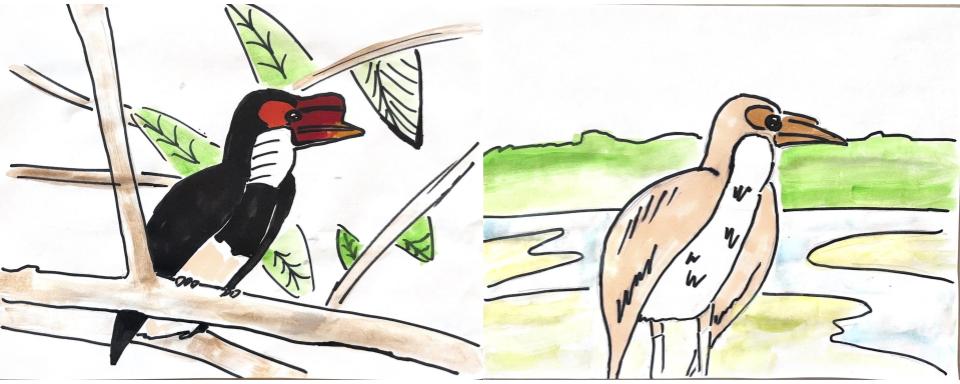
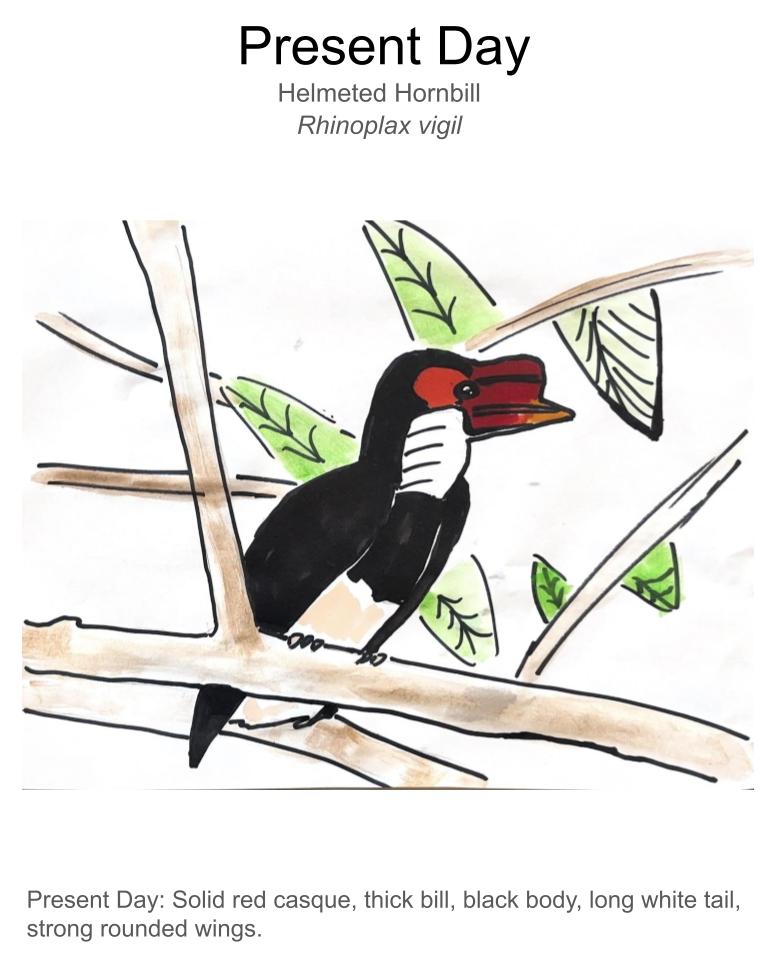
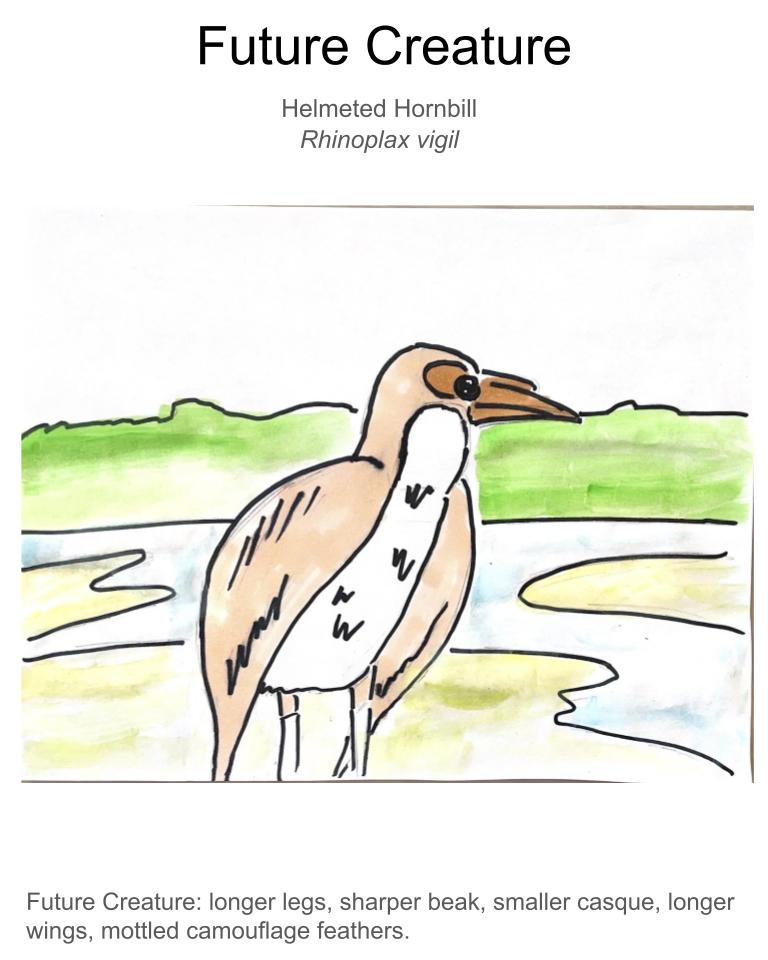
The helmeted hornbill currently lives in dense Southeast Asian rainforests, where it feeds mainly on fruit in the forest canopy and uses its large solid casque for aerial combat with other hornbills. Climate change may flood many coastal rainforests and convert them into marshes and wetlands. Over thousands of years, hornbills living in these regions could evolve into a marsh-adapted form. The future hornbill would develop longer legs for wading in shallow water and a longer, sharper beak for catching fish, frogs, and crustaceans. Because dense forest maneuvering would no longer be necessary, its wings could become longer for gliding over open wetlands. Its casque may shrink and become lighter since aerial combat would be less common. Feather colors may also change to mottled gray and brown to blend into muddy marsh environments. These adaptations would allow hornbills to survive in a dramatically different ecosystem shaped by rising sea levels.
Contact us
Thank you for your interest in contacting Future Engineers. We look forward to connecting with you!
General Inquiries
support@futureengineers.orgSponsorship Inquiries
sponsor@futureengineers.org