

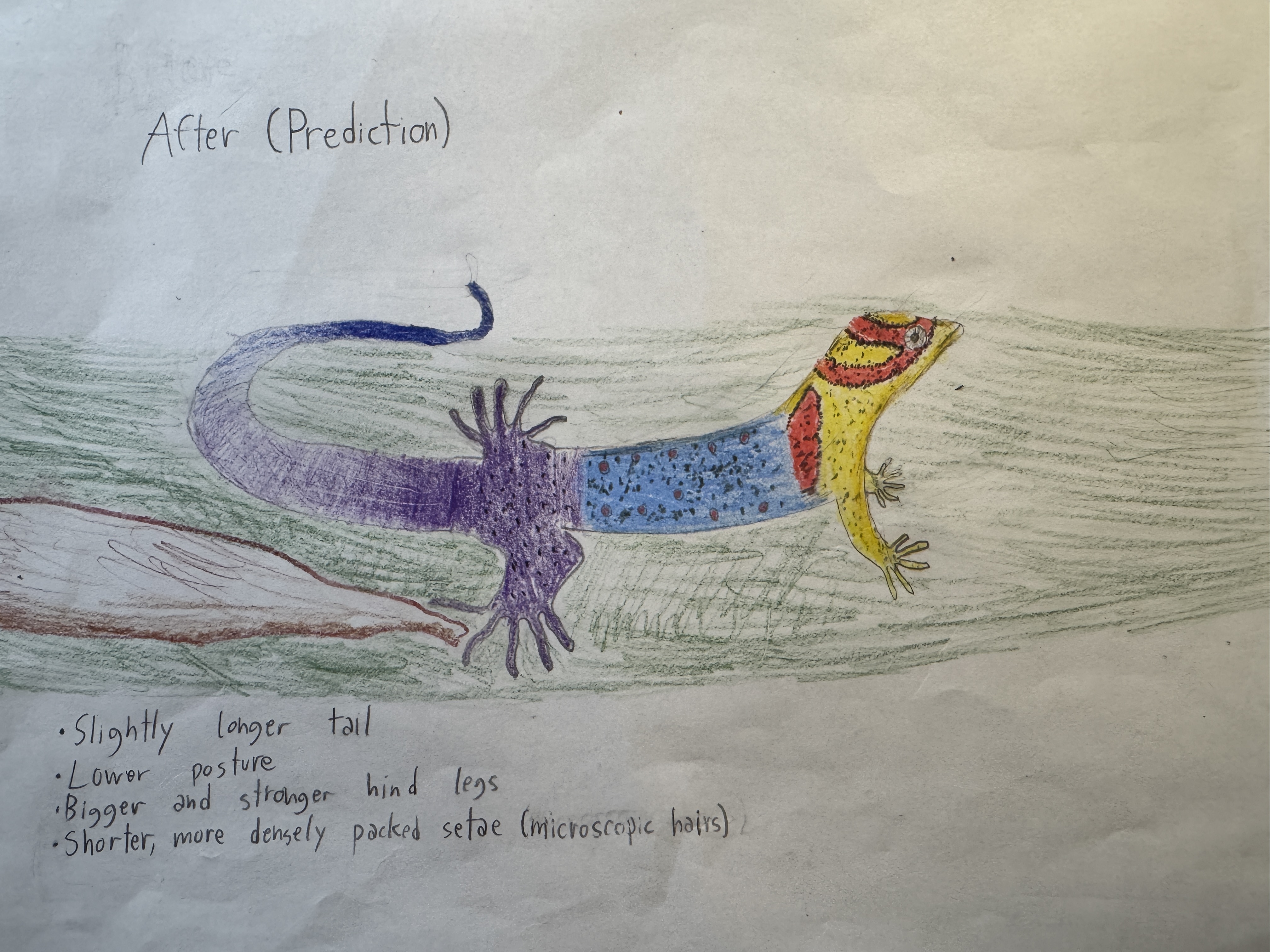
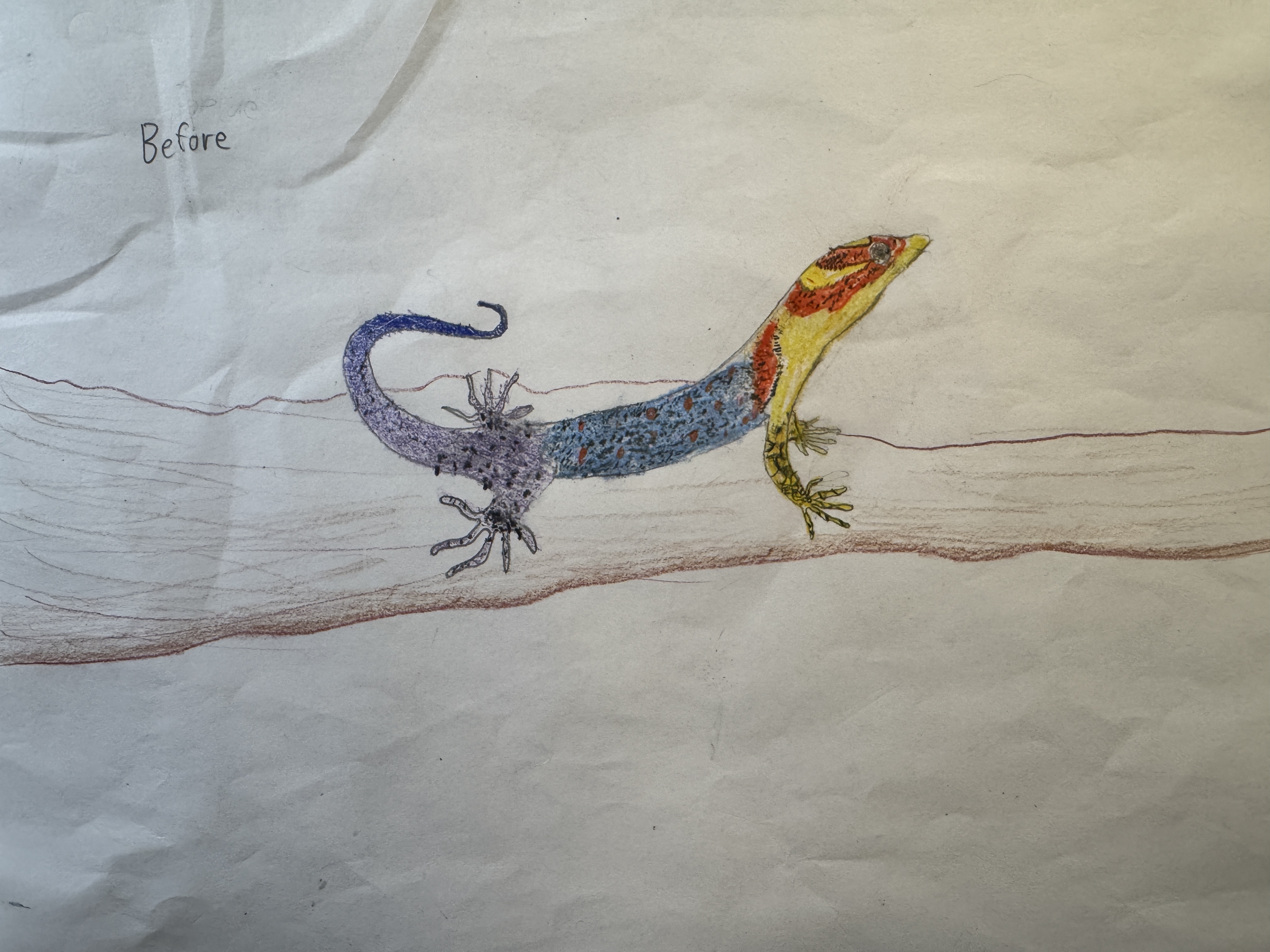
Gonatodes Humeralis’s present habitat involves trees and even human structures, but with deforestation and infrastructure conversion on the rise, G. Humeralis’s habitat is likely to turn to a bigger share of the ground and human infrastructure. With less to climb, G. Humeralis may adapt with bigger tails and stronger hind legs to facilitate higher speed and agility moving on the ground. Additionally, due to the increasing presence of human infrastructure, G. Humeralis would need to develop more effective setae configurations with even shorter, more densely packed microscopic hairs to increase surface area and therefore better utilize van der Waal’s forces so as to more easily scale human infrastructure that would typically be smoother than trees. By 2050, the Amazon could suffer a loss of 10-47% of all its rainforests which would severely affect most animals, but the Gonatodes Humeralis is highly likely to survive such a loss, being highly adaptable.
Contact us
Thank you for your interest in contacting Future Engineers. We look forward to connecting with you!
General Inquiries
support@futureengineers.orgSponsorship Inquiries
sponsor@futureengineers.org