

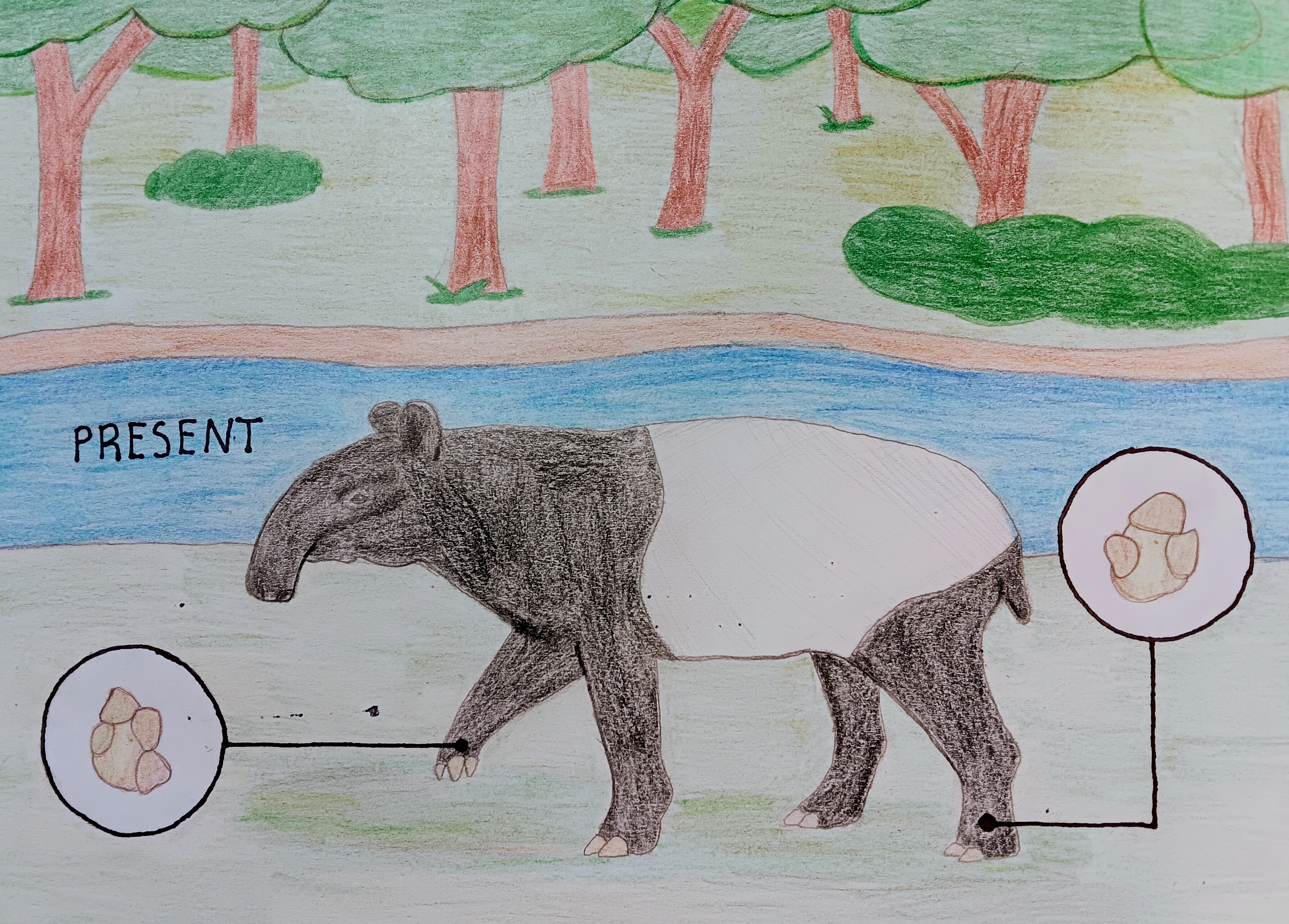
The Malayan tapir (Tapirus indicus) lives in Southeast Asian rainforests and is known for its black-and-white coloring. Mostly nocturnal, it rests near water during daytime in dense foliage to avoid heat. Three hind toes and four front toes help it walk through soft mud, and its long snout helps it forage leaves and shrubs.
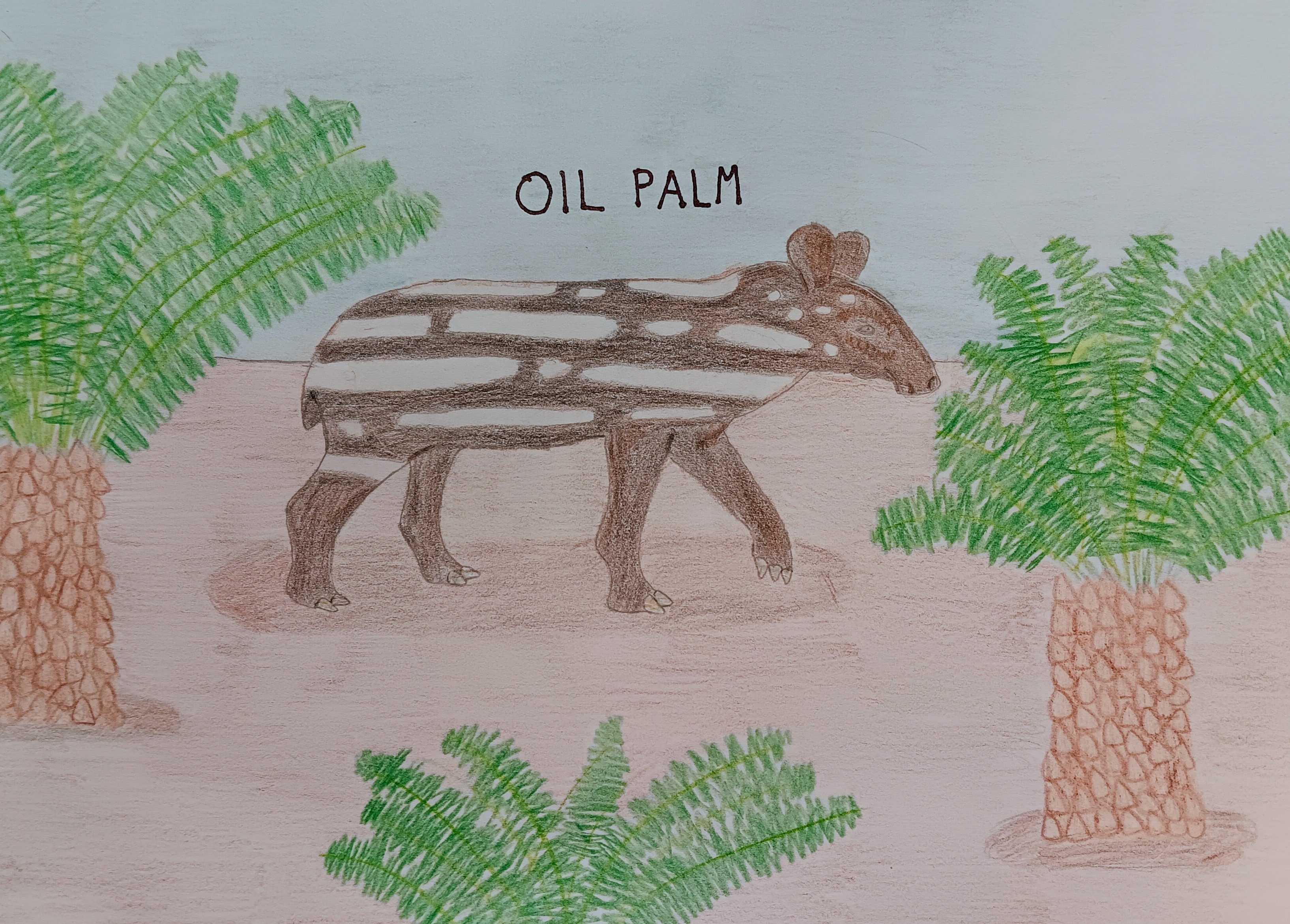
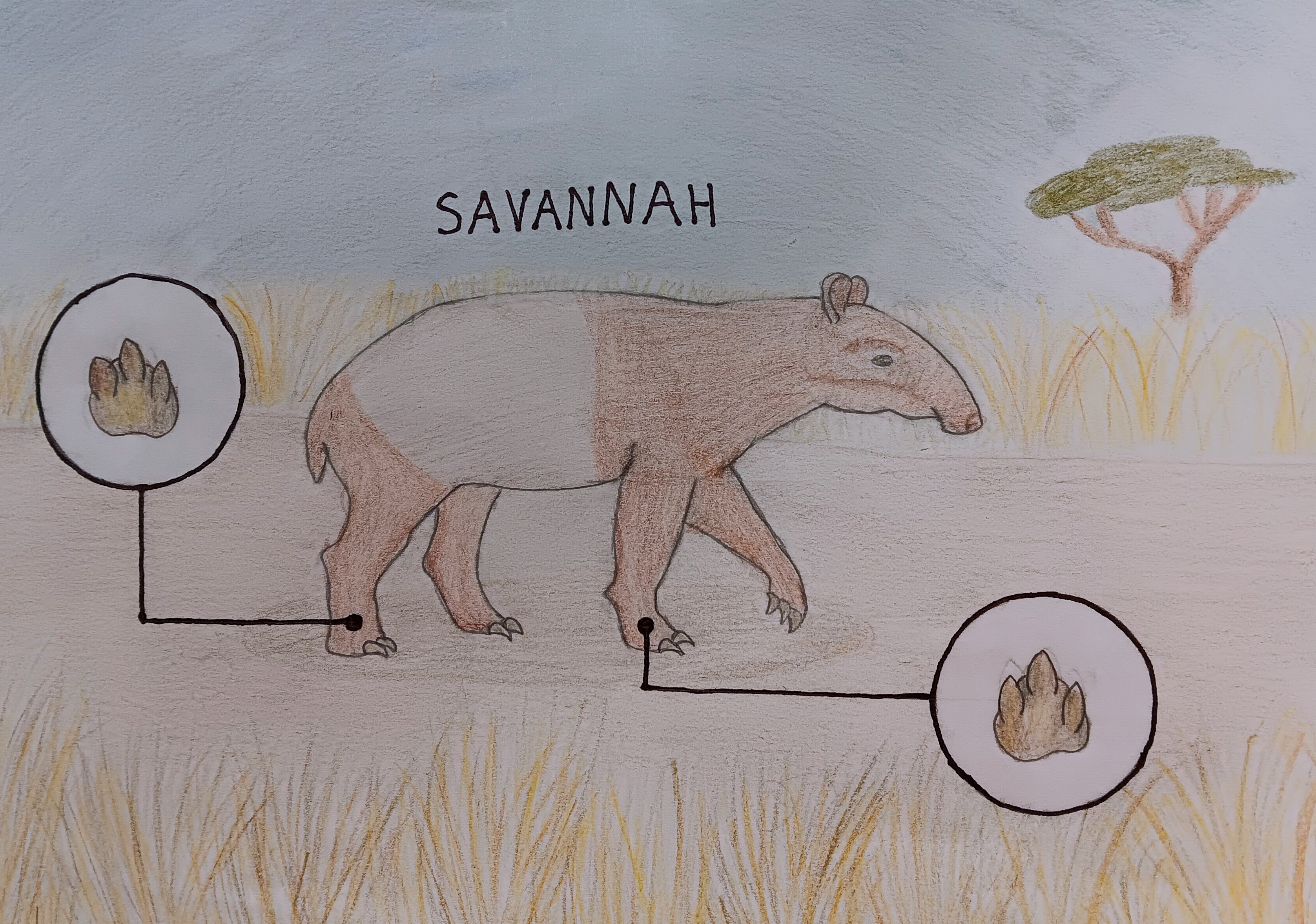
Deforestation (often for agriculture) and drought are reducing habitat and food, so I created two future adaptations. The oil palm plantation tapir has larger ears to detect humans, a shorter, broader snout and stronger teeth for tough palm fronds and fallen fruit, speckled camouflage among the palms, and a smaller, leaner body to survive with less food and avoid humans. The savannah tapir loses its fourth front toe for more balanced and faster movement, develops claw-like hooves for grip on dryer soil, lighter brown fur for grass camouflage, and a smaller body due to limited food.
Contact us
Thank you for your interest in contacting Future Engineers. We look forward to connecting with you!
General Inquiries
support@futureengineers.orgSponsorship Inquiries
sponsor@futureengineers.org