

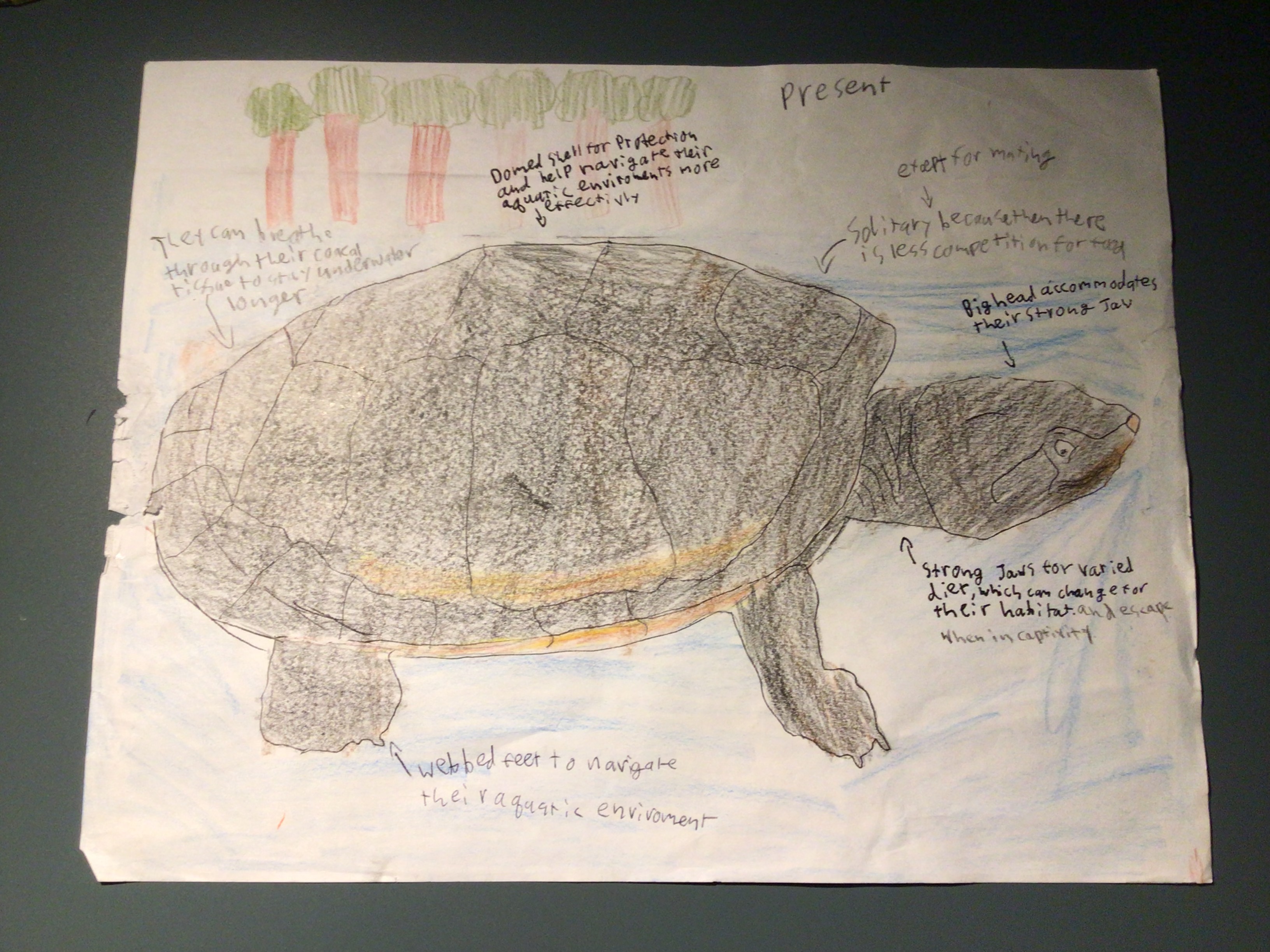
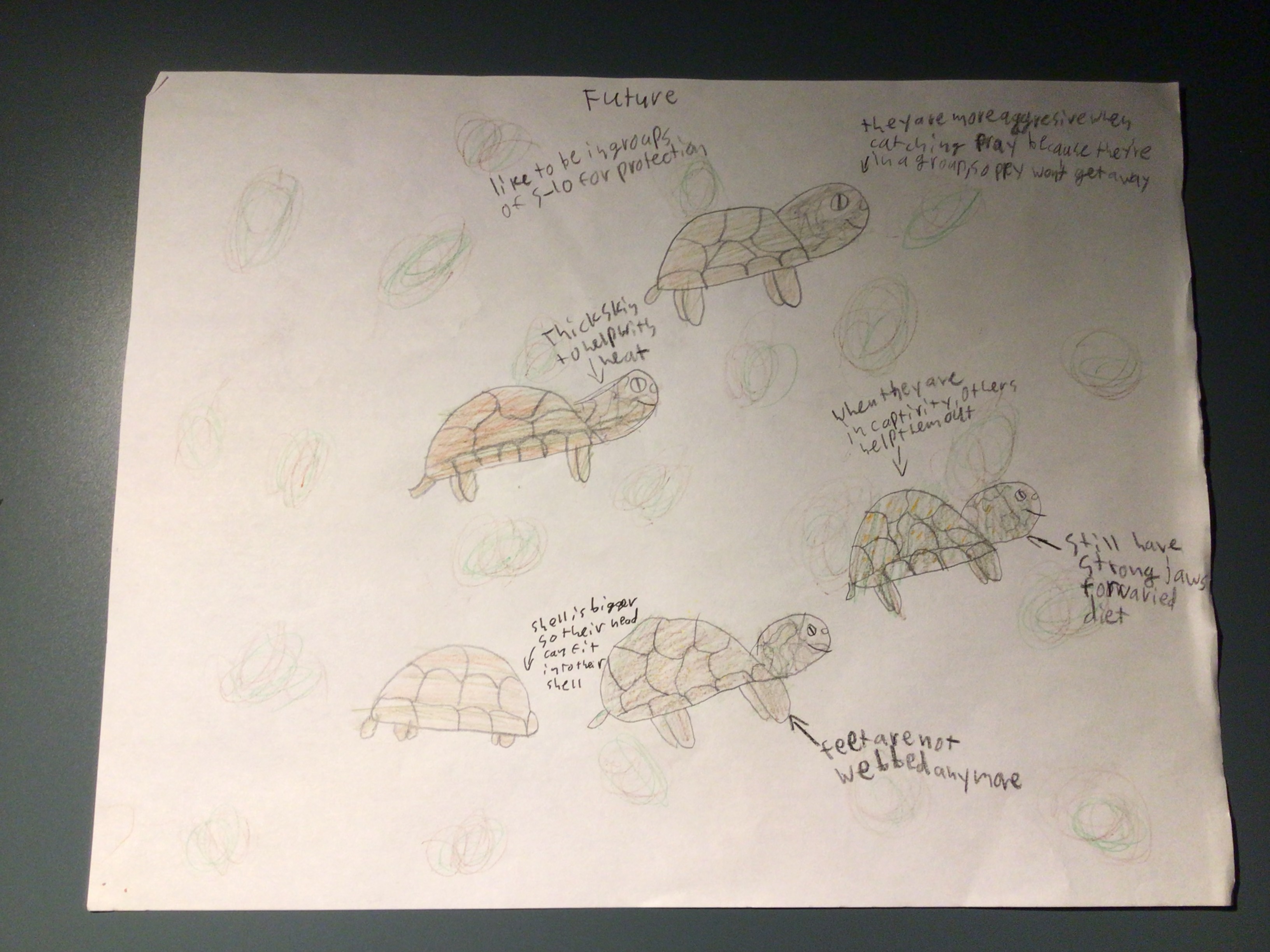
The Big-Headed Amazon River Turtle is typically found in well-preserved seasonally flooded lowland rainforests. Their habitat will change to be a hot, dry shrubland in the future because of global warming. The turtle uses a sit and wait approach to catch prey, and their diet includes insects, mollusks, frogs, and small rodents. The future tortoise goes right after the prey. Their new diet includes the same thing but they were about 85% herbivory before, but now it is going to be about 15% herbivory. The future creature is no longer an aquatic animal, so it is going to be called a Big-Headed Shrub tortoise. They aren’t aquatic animals anymore because there is not that much prey in the water left. The difference between a turtle and a tortoise is that turtles usually have streamlined bodies and webbed feet for swimming, unlike tortoises that have domed shells and sturdy elephant-like legs.
Contact us
Thank you for your interest in contacting Future Engineers. We look forward to connecting with you!
General Inquiries
support@futureengineers.orgSponsorship Inquiries
sponsor@futureengineers.org