

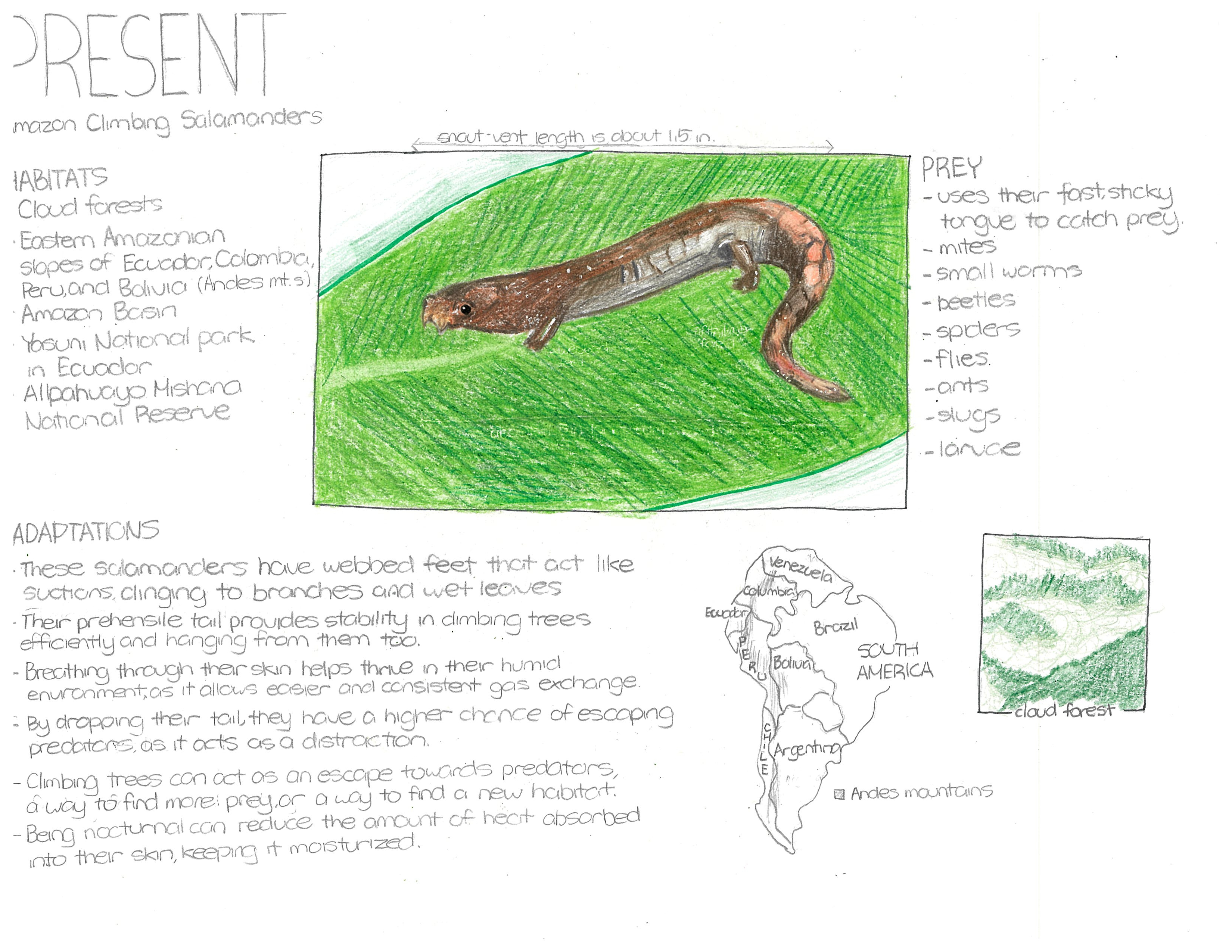
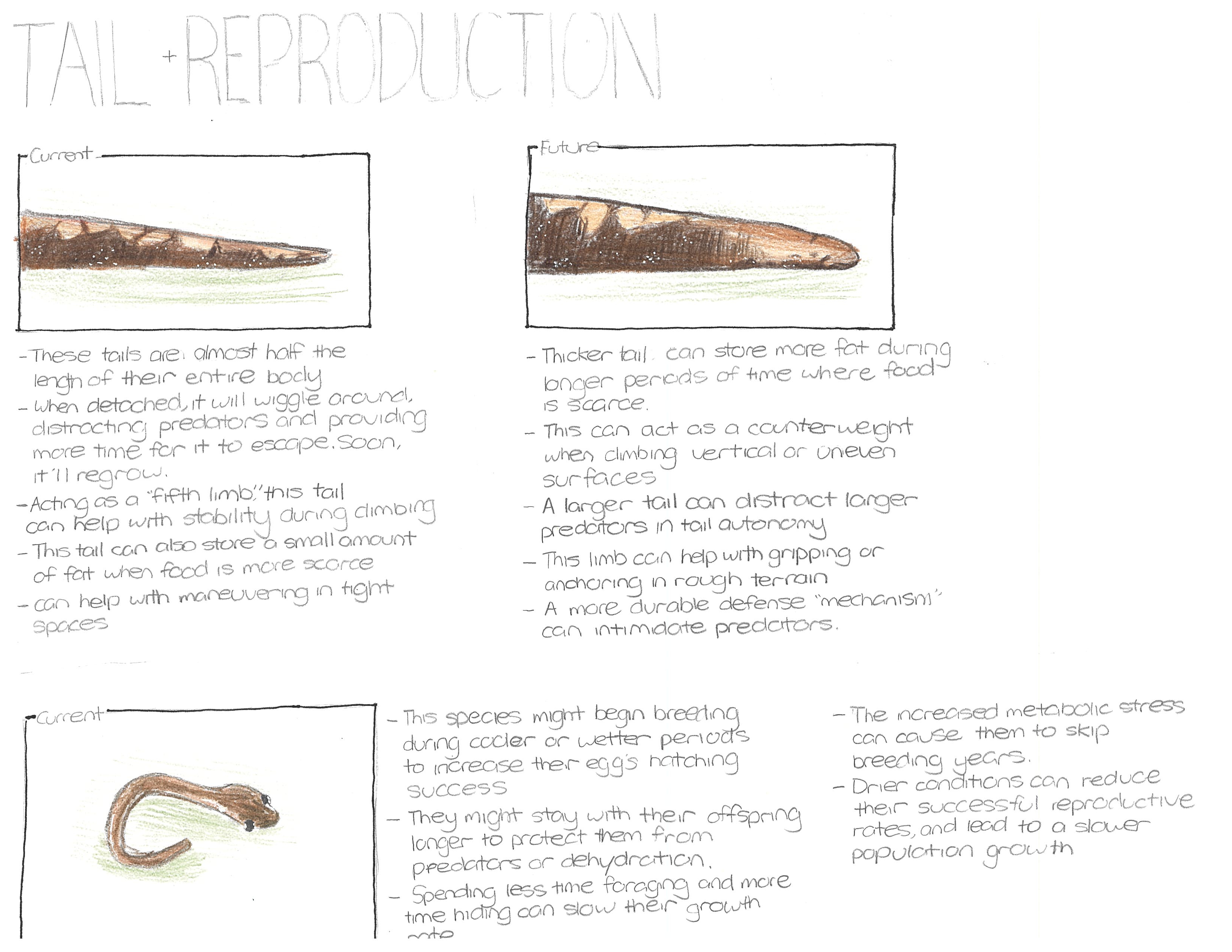
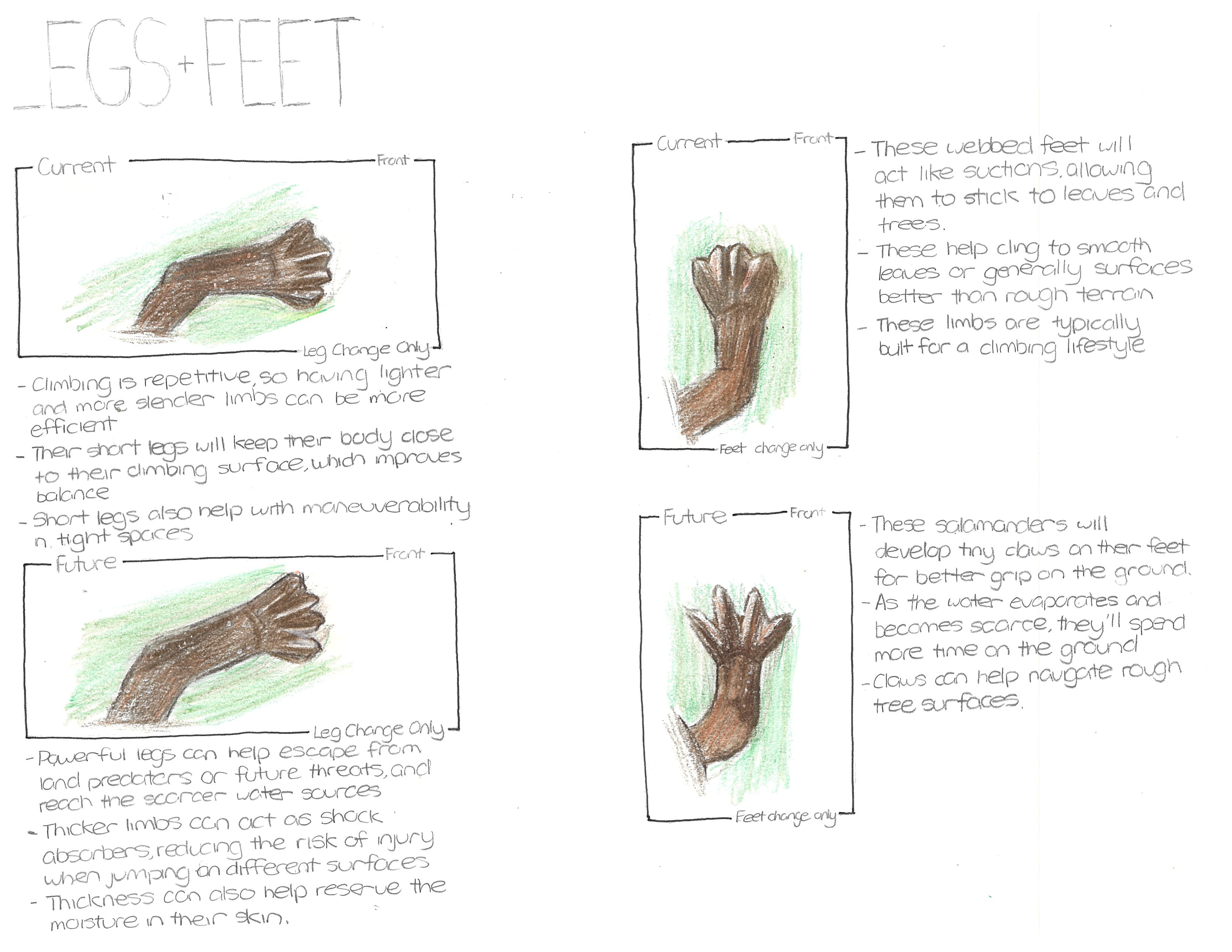
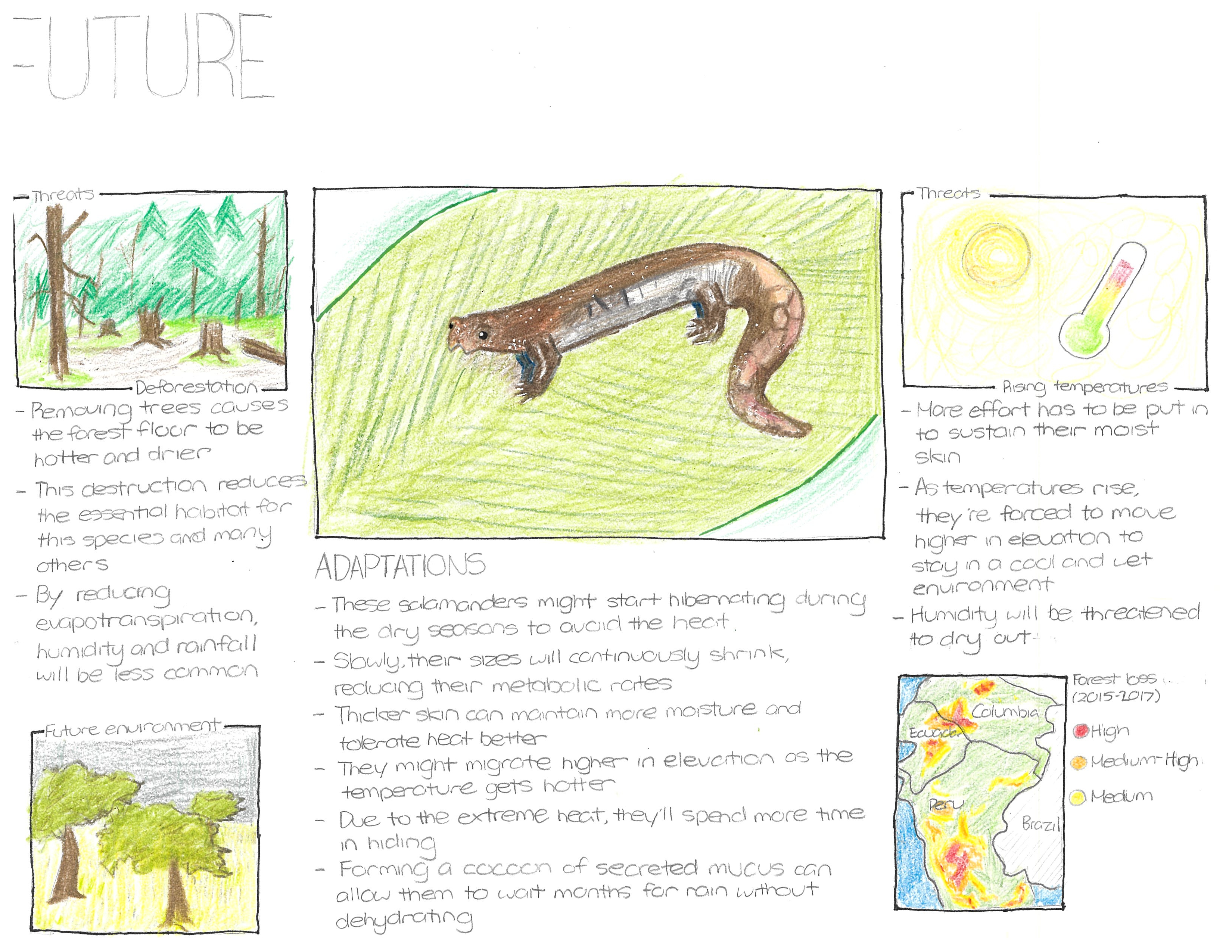
The Amazon Climbing Salamander lives in cloud forests. However, due to warming temperatures, this environment will be drier and be less foggy, significantly reducing the humidity these creatures need. To adapt, it will develop a thicker, more muscular tail to store fat during longer droughts and defense against predators. It can also be a counterweight in vertical surfaces. When detached, a larger tail can wiggle around more to distract larger predators, and also act as a more durable defense "mechanism" to intimidate predators. Furthermore, its legs will also be thicker and more muscular to reach the scarcer water sources and preserve more moisture in their skin. Their feet will develop tiny claws for better grip on the ground. This species might begin breeding during cooler or wetter periods, increasing their egg's hatching success in the heat. Spending less time foraging and more time hiding can slow their growth rate.
Contact us
Thank you for your interest in contacting Future Engineers. We look forward to connecting with you!
General Inquiries
support@futureengineers.orgSponsorship Inquiries
sponsor@futureengineers.org