

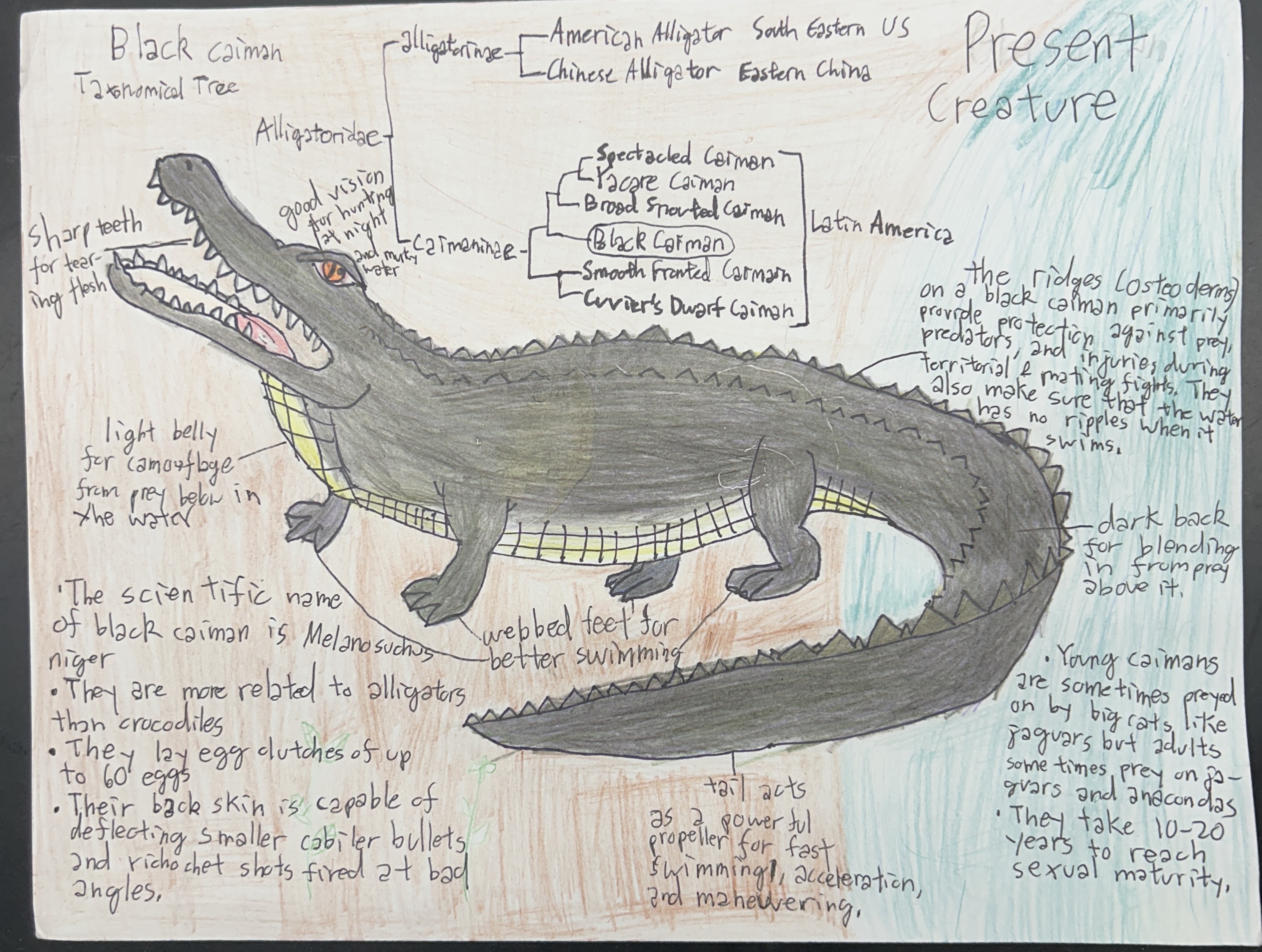
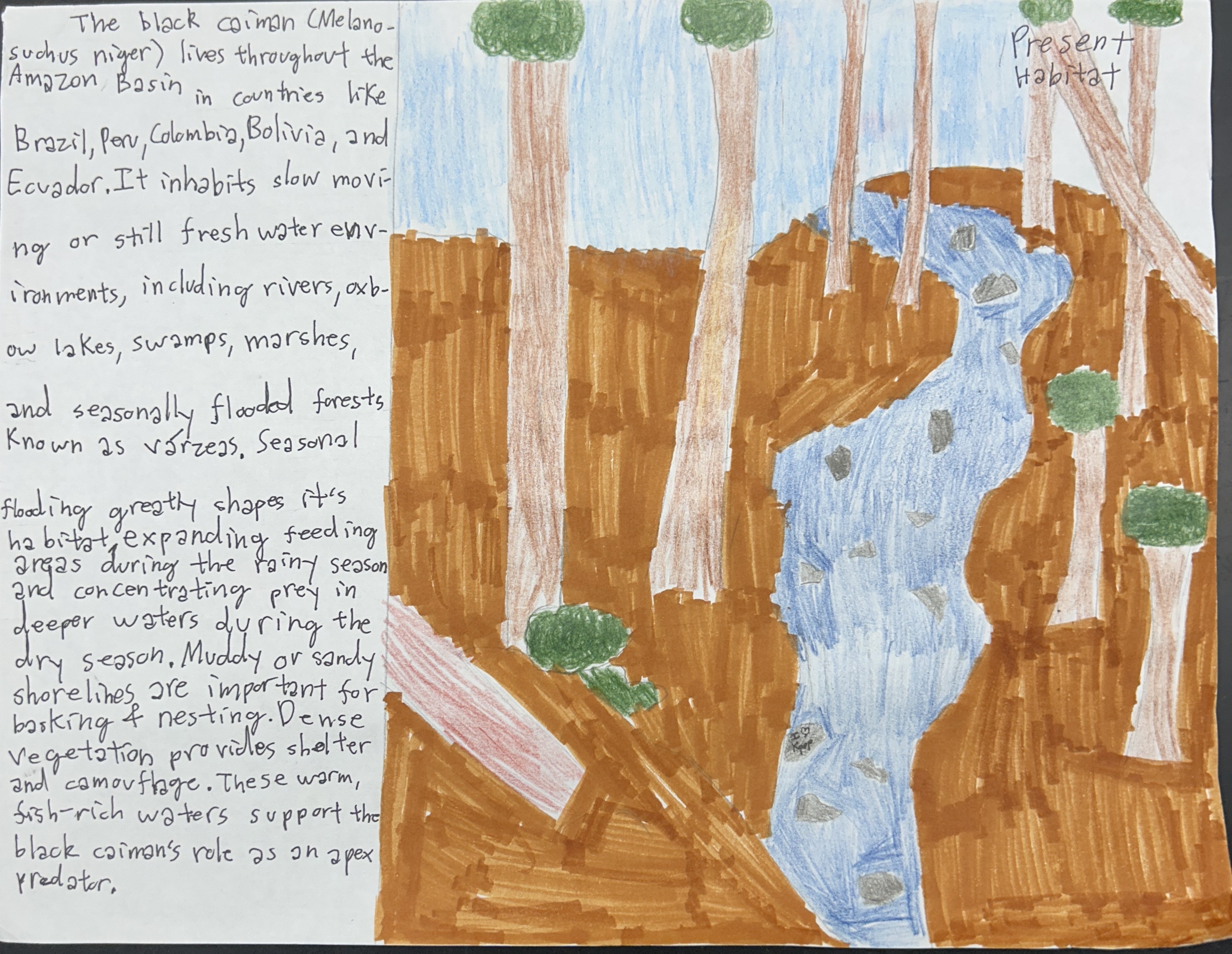
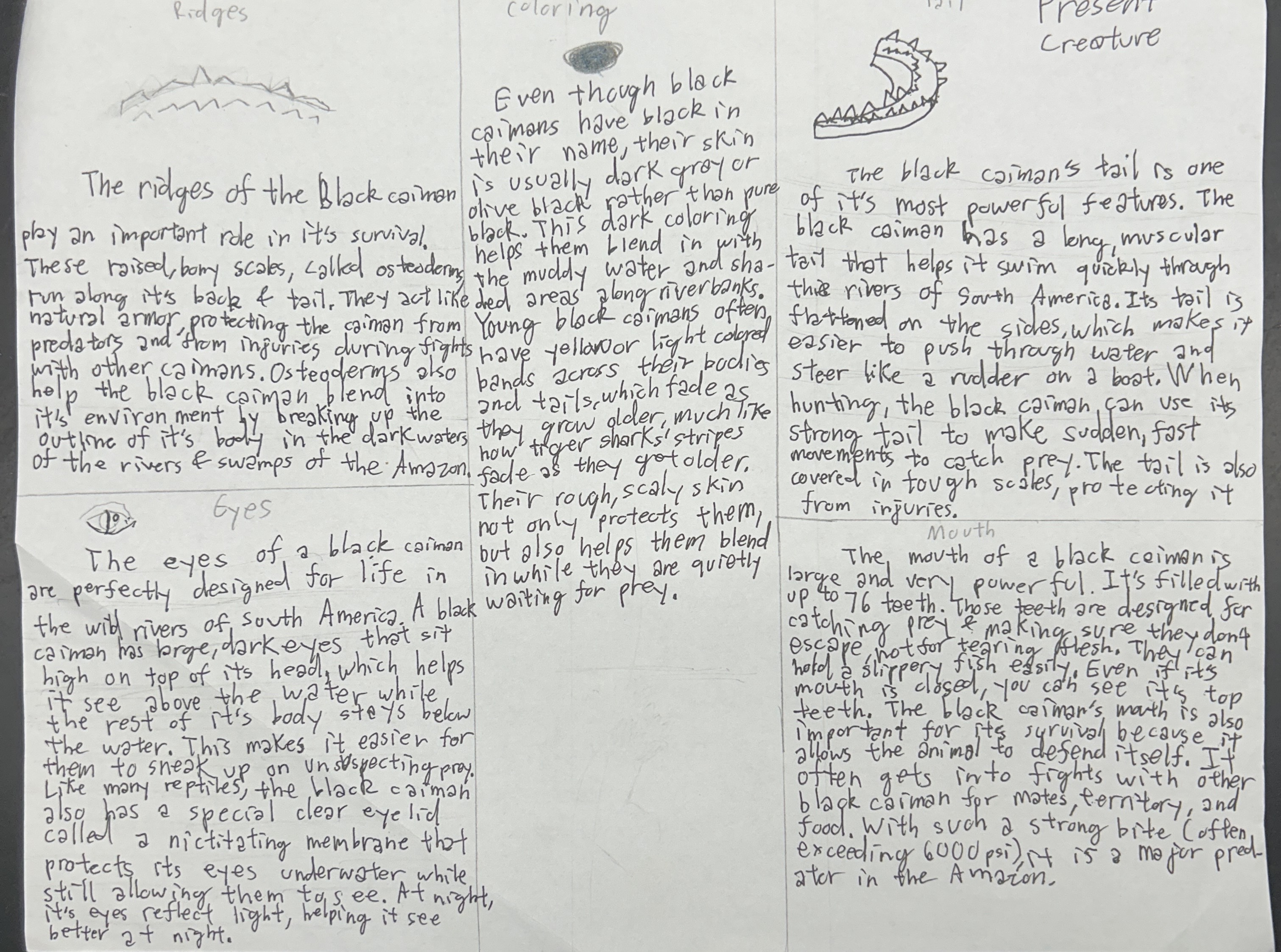
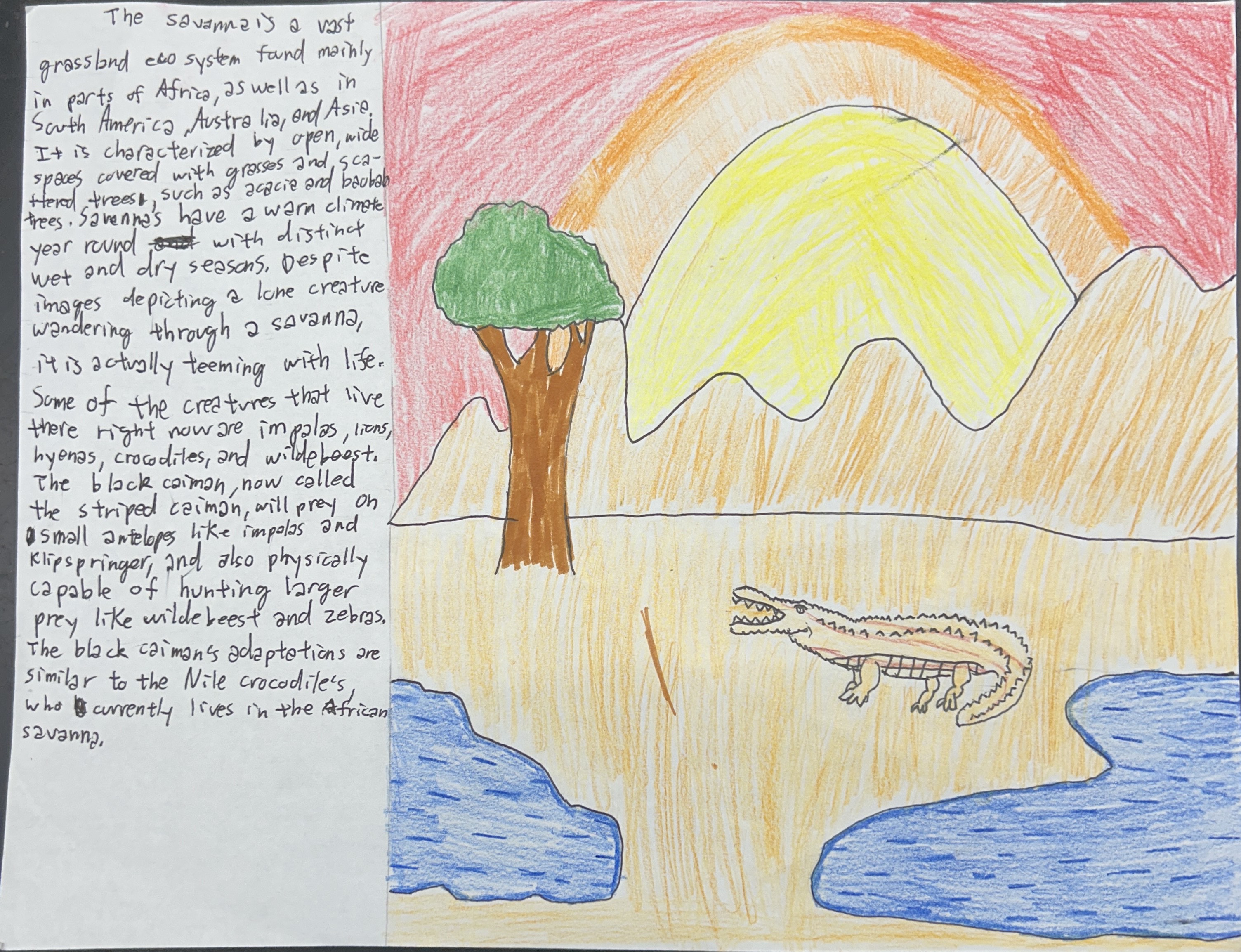
The Black caiman is one of the largest predators of the Amazon Basin, thriving in the slow rivers and flooded forests of the Amazon rainforest. With its dark, armored scales and powerful tail, it blends easily into shadowy waters, waiting silently for prey to approach. But if its lush, watery habitat transformed into an open savanna, the black caiman would face immense pressures to adapt.
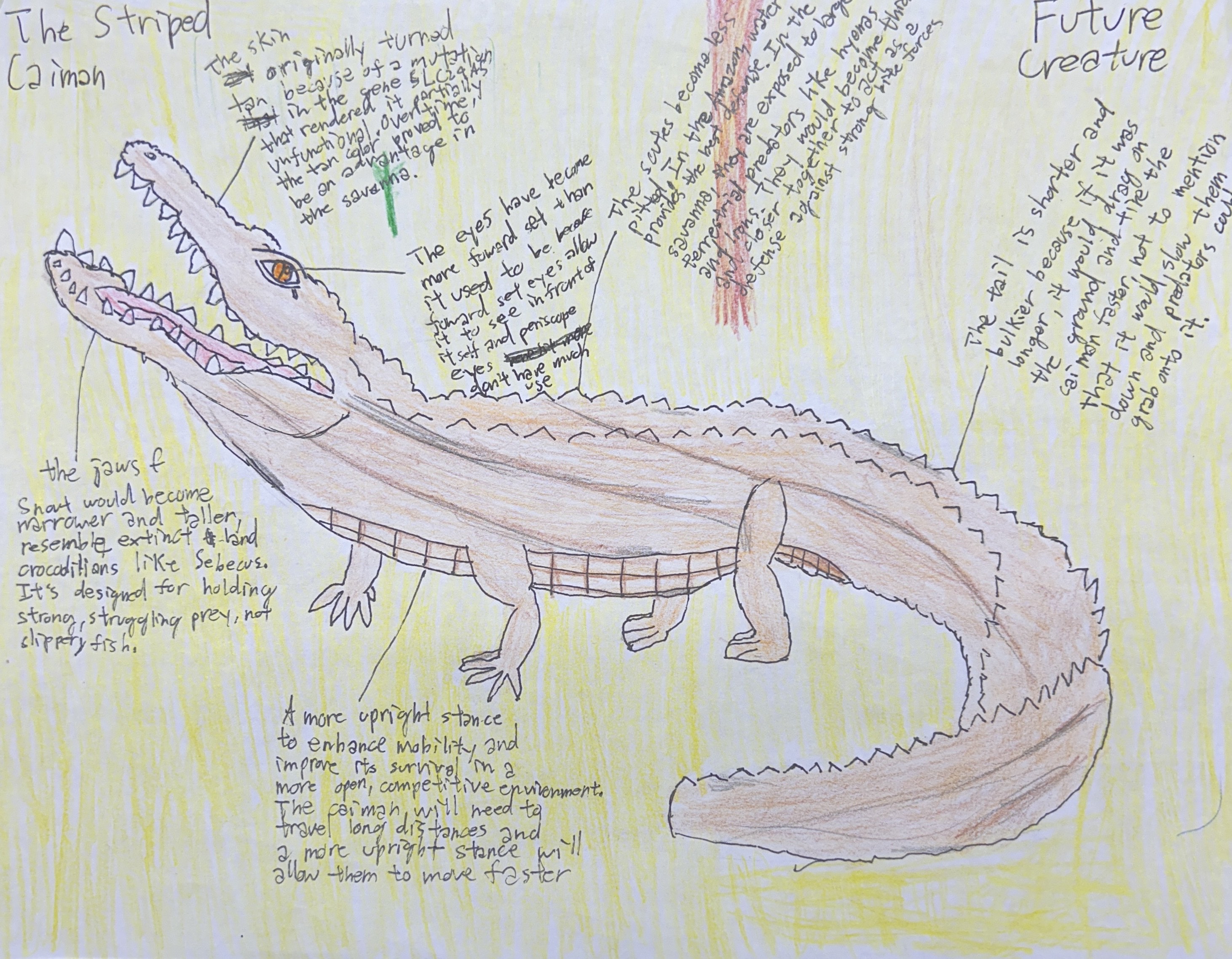
As dense forests give way to grasslands and seasonal drought, darker coloring would absorb too much heat beneath the sun. Over generations, natural selection will favor caimans with lighter, tan scales that reflect sunlight and blend with dry grasses. A more upright stance could help them move efficiently across firmer ground, while a shorter, bulkier tail might develop as swimming became less central to survival. In this new savanna world, the once river-bound predator would evolve into a land-adapted hunter, reshaped by its changing environment.
Contact us
Thank you for your interest in contacting Future Engineers. We look forward to connecting with you!
General Inquiries
support@futureengineers.orgSponsorship Inquiries
sponsor@futureengineers.org