

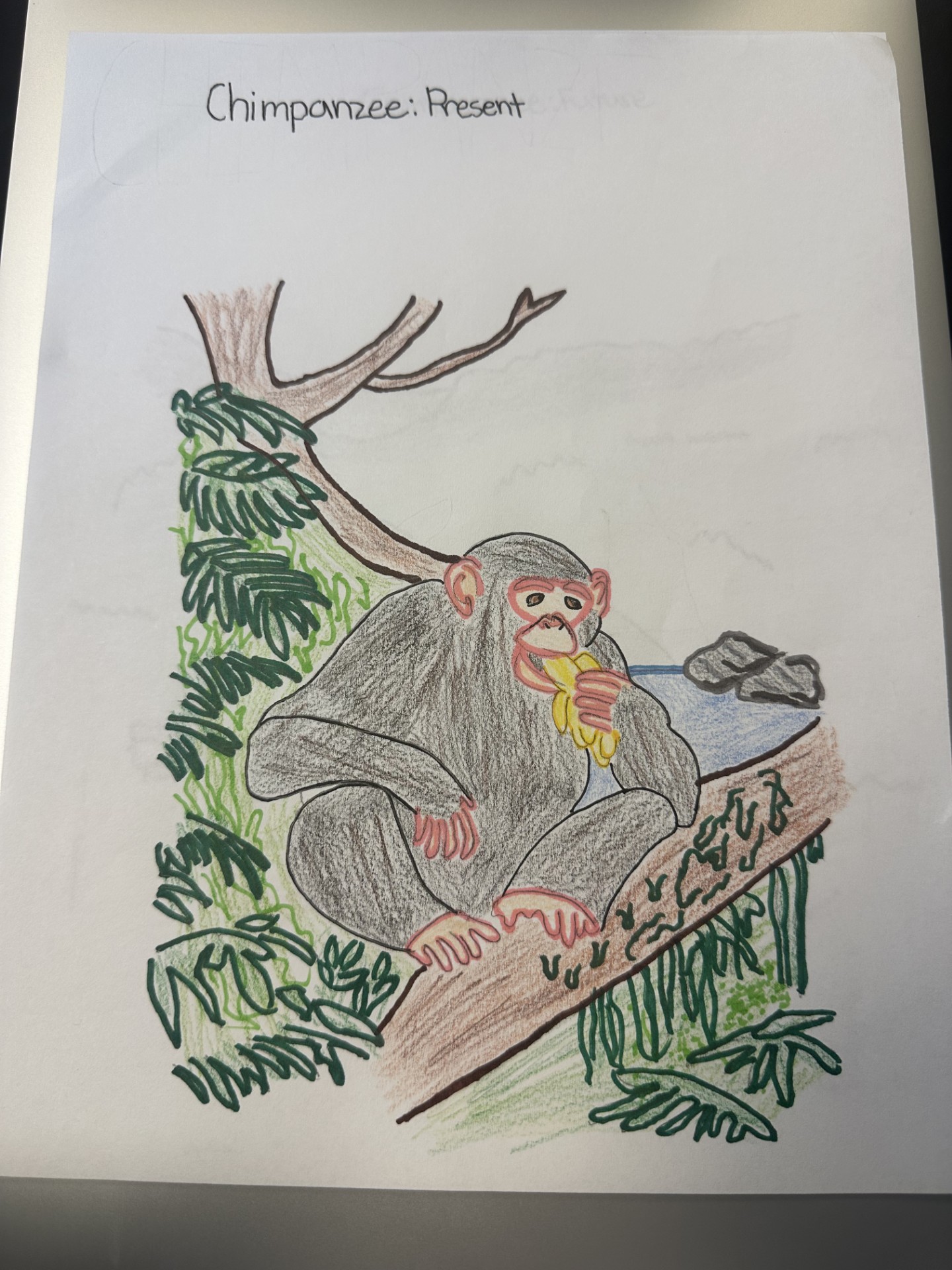
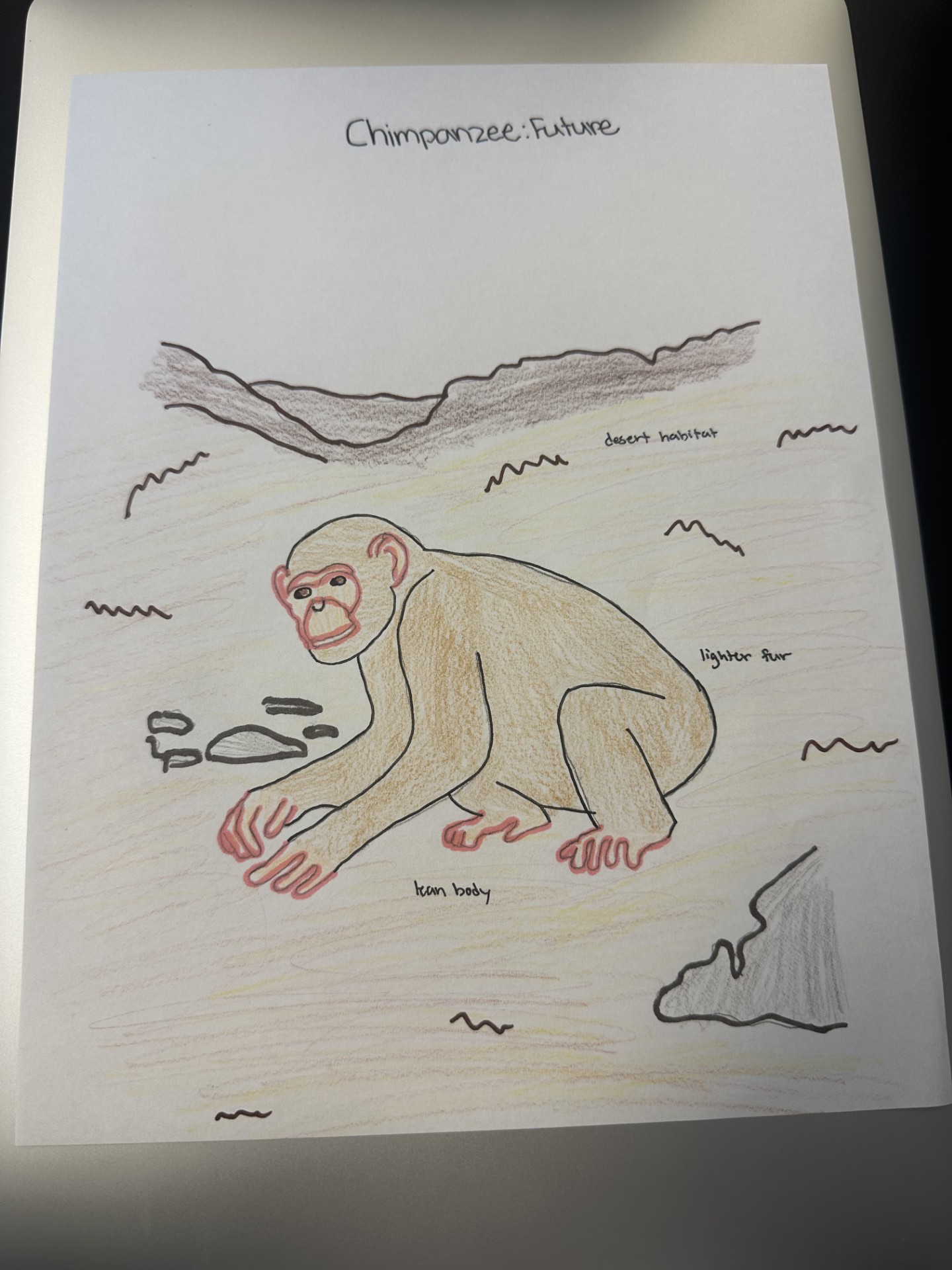
Chimpanzees show important present and future adaptations that help them survive in a rapidly changing environment. Today, they live in forests and savanna habitats, where they use behaviors such as resting in caves to escape heat, digging for groundwater during dry seasons, and changing activity times to cooler parts of the day. They also use tools for survival, including sticks for insects fishing and food gathering, and show genetic adaptations such as resistance to diseases like malaria and SIV. However, their present habitat is predicted to change because of climate change, deforestation, and human expansion, leading to hotter, drier, and more fragmented ecosystems. In the future, chimpanzees may develop stronger heat tolerance, more flexible diets, improved immune systems, and behaviors suited to living near humans. Their long-term survival will depend on maintaining genetic diversity and continuing behavioral adaptations to survive environmental stress, habitat loss, and changing ecological conditions.
Contact us
Thank you for your interest in contacting Future Engineers. We look forward to connecting with you!
General Inquiries
support@futureengineers.orgSponsorship Inquiries
sponsor@futureengineers.org