

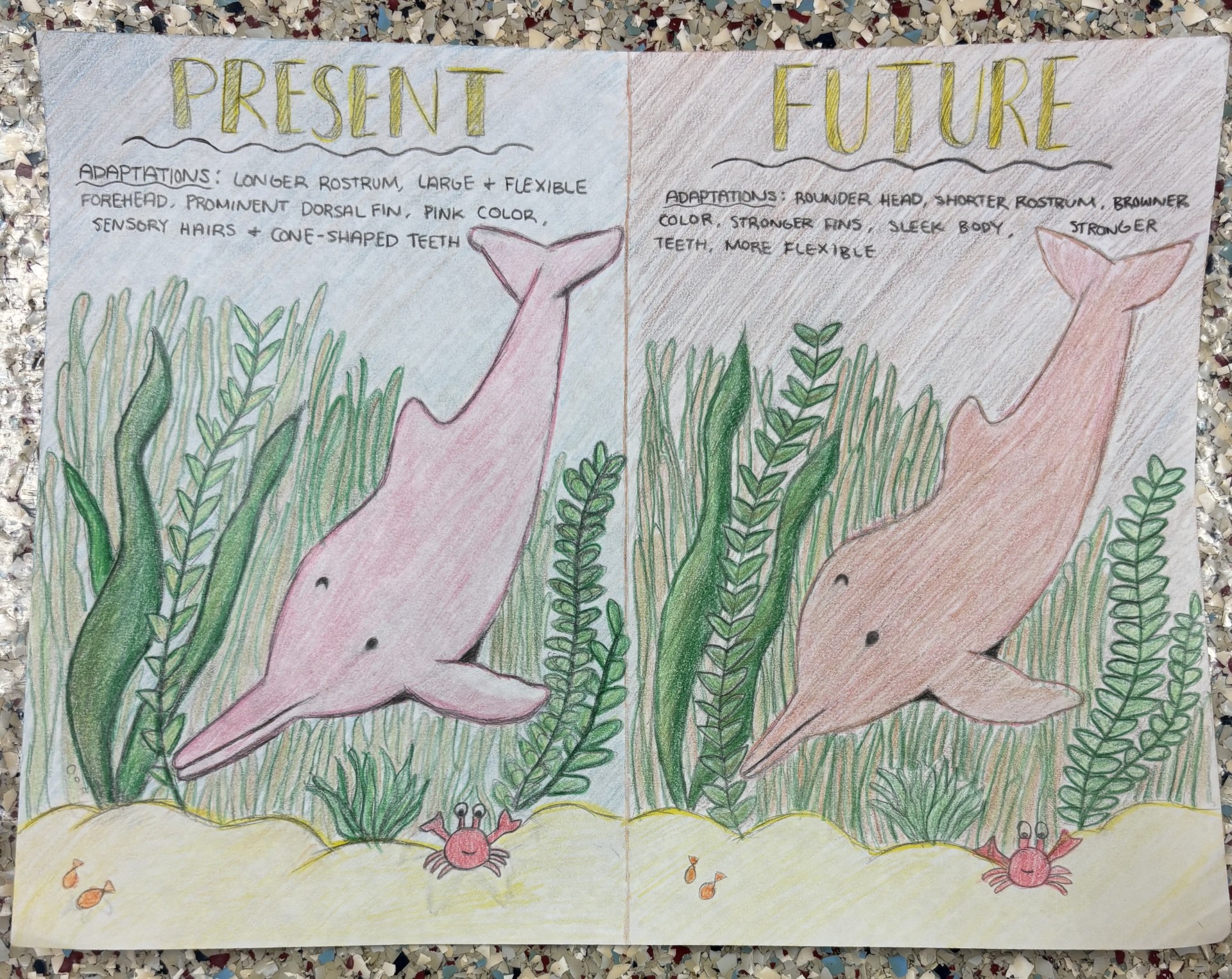
Current adaptations are an unfused neck vertebrae which helps them turn their neck 90 degrees to maneuver through the branches underwater. They have a longer snout with cone-shaped teeth that help with holding/crushing their prey (crabs, fish, etc). Their prominent head helps with echolocation through the murky water. They have fins that are flexible and help with navigating through complex and tight spaces. And lastly they have a pink color which darkens as they age. For future adaptations, I think they will have an even rounder head which will improve their echolocation in even murkier, polluted waters. Their pink color will change into a brownish pink to help with better camouflage. A smaller body shape for better navigation as their environment could start to shrink. Stronger cone-shaped teeth because their diet of fishes could change due to overfishing.
Contact us
Thank you for your interest in contacting Future Engineers. We look forward to connecting with you!
General Inquiries
support@futureengineers.orgSponsorship Inquiries
sponsor@futureengineers.org